Saturday 31 January 26
Davos, China, and the UK Tech Delegation: The Strategic Signals Every C-Suite Leader Must See
By The Leadership Alchemist, a performance optimisation expert who believes in ethical intelligence, practical productivity, and the responsible acceleration of human potential.
I have watched closely throughout January as in global leadership circles two major narratives converged with profound implications for innovation, strategy and executive decision-making:
- The World Economic Forum in Davos, where innovation and geopolitical risk hierarchies were re-debated on the world stage.
- The UK’s high-level visit to China this week, led by Prime Minister Sir Keir Starmer, with a prominent delegation of business and technology leaders. (Business Secretary wants UK to go ‘toe to toe’ with America on growth)
Together, these moments reveal how leaders must now operate in a world where strategy, diplomacy, and technology execution are inseparable.
1. Innovation That’s Global, Practical, and Politically Astute

Our recent international collaboration in the Kingdom of Saudi Arabia highlights that global innovation and engagement is redefining the business landscape.
At Davos, executives made it clear: Innovation is no longer an experiment, it’s an operational imperative. Leaders are prioritising measurable AI and digital transformation outcomes over abstract promise.
But global innovation isn’t just about technology; it’s also about geopolitical engagement.
This week, UK Prime Minister Sir Keir Starmer visited China; the first UK leader to do so in eight years, accompanied by senior executives from finance, pharmaceuticals, energy, and tech sectors, including prominent CEOs such as AstraZeneca’s Pascal Soriot and Octopus Energy’s Greg Jackson. Greg Jackson’s action-oriented approach and Octopus Energy’s rapid growth have built a reputation for reducing bureaucratic delays and focusing on rapid execution of renewable projects; using international collaboration, specifically with China, as a model.
This UK delegation underscores the strategic reality: Technology leadership today requires political engagement and cross-border collaboration.
For C-suite executives, the lesson is clear:
Innovation leadership isn’t confined to internal R&D or AI models; it extends to navigating global tech ecosystems and policy environments.
2. Strategic Stability as Competitive Advantage
Davos experts and business leaders alike emphasised a shift from disruption for disruption’s sake towards sustainable, disciplined transformation.
This message was reinforced in Beijing, where Starmer and the Chinese leadership discussed long-term economic cooperation and strategic stability, even amidst geopolitical tensions. Both sides signalled a desire to recalibrate bilateral relations, deepen economic ties and pursue trade and innovation cooperation without ignoring national interests.
For executives, strategic stability means:
- Aligning innovation investments with geopolitical insights. .
- Building cross-border value chains that are resilient, not brittle.
- Preparing organisations to lead through uncertainty, rather than simply react to it.
In an era where diplomatic relations directly impact supply chains, exports, IP regimes and regulatory environments, C-suite leaders must think beyond quarterly metrics.
3. Leadership Presence Has Turned International
At Davos, personal leadership visibility; from AI governance to sustainable transformation, was a dominant theme.
In China, Prime Minister Starmer’s delegation brought that notion to life, blending political gravitas with direct business representation. Over 60 business and cultural leaders joined the visit, signalling the UK’s intent to integrate strategic dialogue, commercial strategy and executive leadership in ways that matter globally. The presence of corporate leaders on such a diplomatic tour reflects an emerging truth:
Today’s C-suite role transcends the boardroom; it now includes engagement with global partners, policymakers, and economic architects.
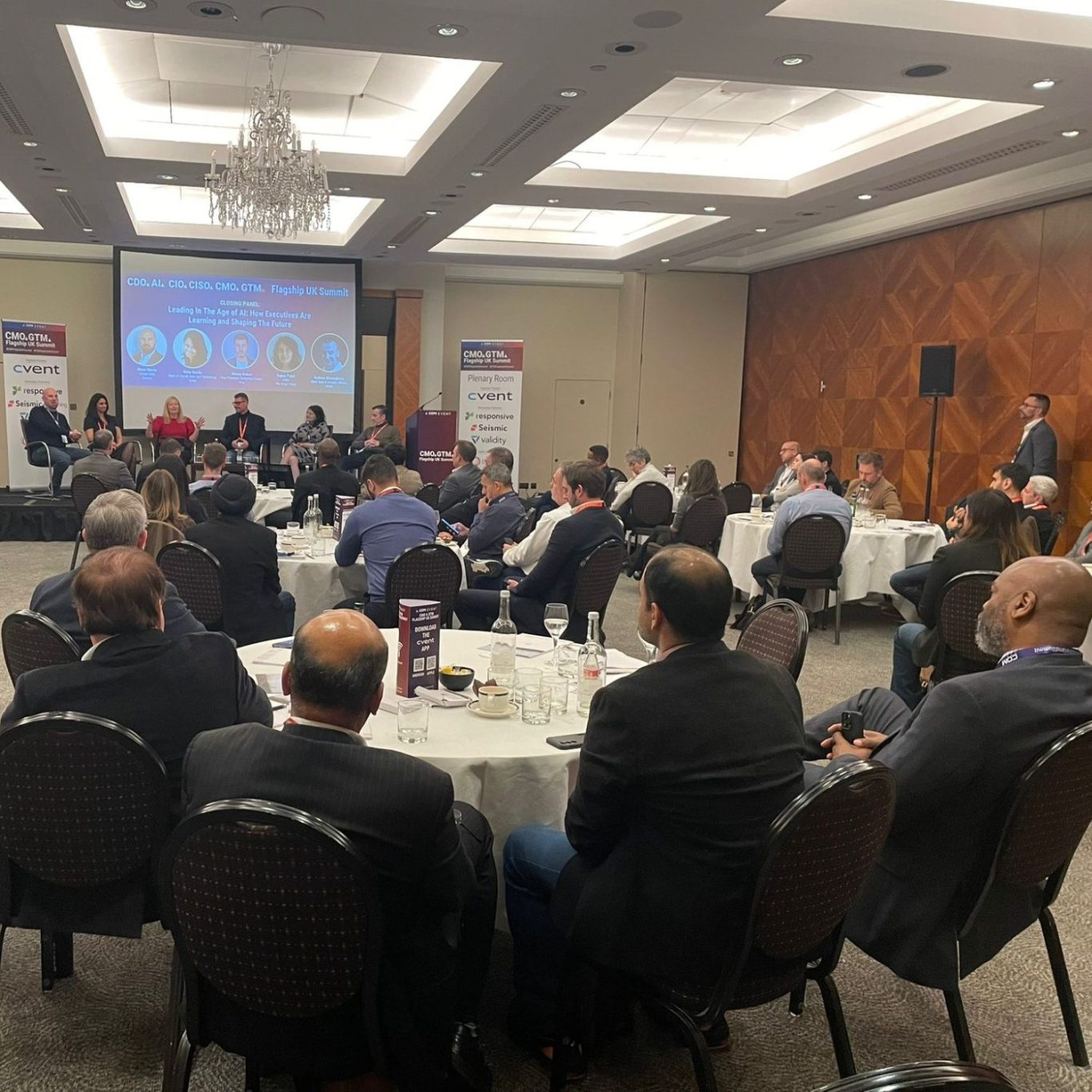
Supporting a C-Suite conference in London with delegates from across the global technology landscape. .
This is not ceremonial. Deals announced during the visit spanning energy-tech cooperation, financial services dialogues, and export and investment frameworks reflect real business outcomes, not symbolic photo opportunities.
4. Talent & Capability Are Competitive Issues - Domestically AND Globally
Both Davos dialogues and the UK-China engagement highlighted talent development and capability as central strategic concerns.
Global innovation leadership requires:
- Attracting and retaining global talent
- Building cross-cultural management capability
- Structuring organisations to succeed across regulatory and market borders
In China, with its vast AI ecosystem and rapidly scaling innovation capacity, executives can’t simply compete on technology alone; they must compete on organisational capability, agility, and trust. The UK delegation’s focus on services, energy innovation, and biotech indicates where such capability battles will be fought and won.
5. Sustainability Is Now a Global Operating Condition
From energy cooperation discussions in Beijing to climate and resilience debates at Davos, sustainability is no longer a bucket of goals; it is a board-level operating requirement.
The UK-China dialogue included commitments on renewable energy technology and cooperation on climate-related industry standards; signalling that sustainable innovation is now baked into global commercial strategy.
The strategic imperative for leaders:
- Integrate sustainability into core operating and investment decisions.
- Treat environmental resilience as an economic advantage.
- Use sustainability commitments as a bridge to global partnerships, not merely as marketing.
What This Means for C-Suite Leaders Today
The intersections between the Davos themes, Chinese market reality, and the UK’s tech-diplomatic push reveal a powerful truth:
Global leadership is now a strategic blend of innovation, diplomacy, and execution.
This means:
- Technology strategy can’t ignore the geopolitical context
- Market expansion requires political awareness
- Leadership presence often involves national-scale engagement
- Talent and sustainability are board-level strategy issues
C-suite success now depends on leading at these intersections, not within silos.
A Final Thought
Across Davos and Beijing, the clear message for executives is this:
Leadership is no longer just about internal performance, it’s about positioning organisations to thrive in a global ecosystem shaped by policy, partnerships, and purposeful innovation.
For leaders intent on shaping the future and not simply reacting to it; the mandate has never been clearer.
Stay safe, and add value. \
The Leadership Alchemist