Saturday 2 May 26
Finding Centre: Leadership From Command to Commerce
By The Leadership Alchemist, a performance optimisation expert who believes in ethical intelligence, practical productivity, and the responsible acceleration of human potential.
There are moments in a career where the noise falls away and the decision lands squarely with you.
I’ve experienced that in multiple contexts; on combat operations where timelines compress and consequences are immediate, and later at the centre of government where decisions carry national weight and second-order effects ripple far beyond the room.
Different environments. Different stakeholders. Same underlying demand:
Clarity under pressure.
That truth was reinforced again this week, watching King Charles III’s address to the U.S. Congress; a moment of diplomacy delivered in a highly charged, complex environment. His message was measured, deliberate, and grounded in history —emphasising unity, restraint, and perspective in uncertain times.
A reminder that at the highest levels—whether in statecraft or business—how you show up under pressure is leadership.
From Command to Commerce
Transitioning from command environments into commercial and advisory roles, I expected the pace and pressure to change.
In reality, they didn’t. They evolved.
Deadlines became less visible but no less real. Risk shifted from immediate to cumulative. Decisions moved from directive to distributed.
And pressure? It became internalised.
In command, pressure is shared and explicit. In commerce, it is often carried silently — particularly at C-suite and board level.
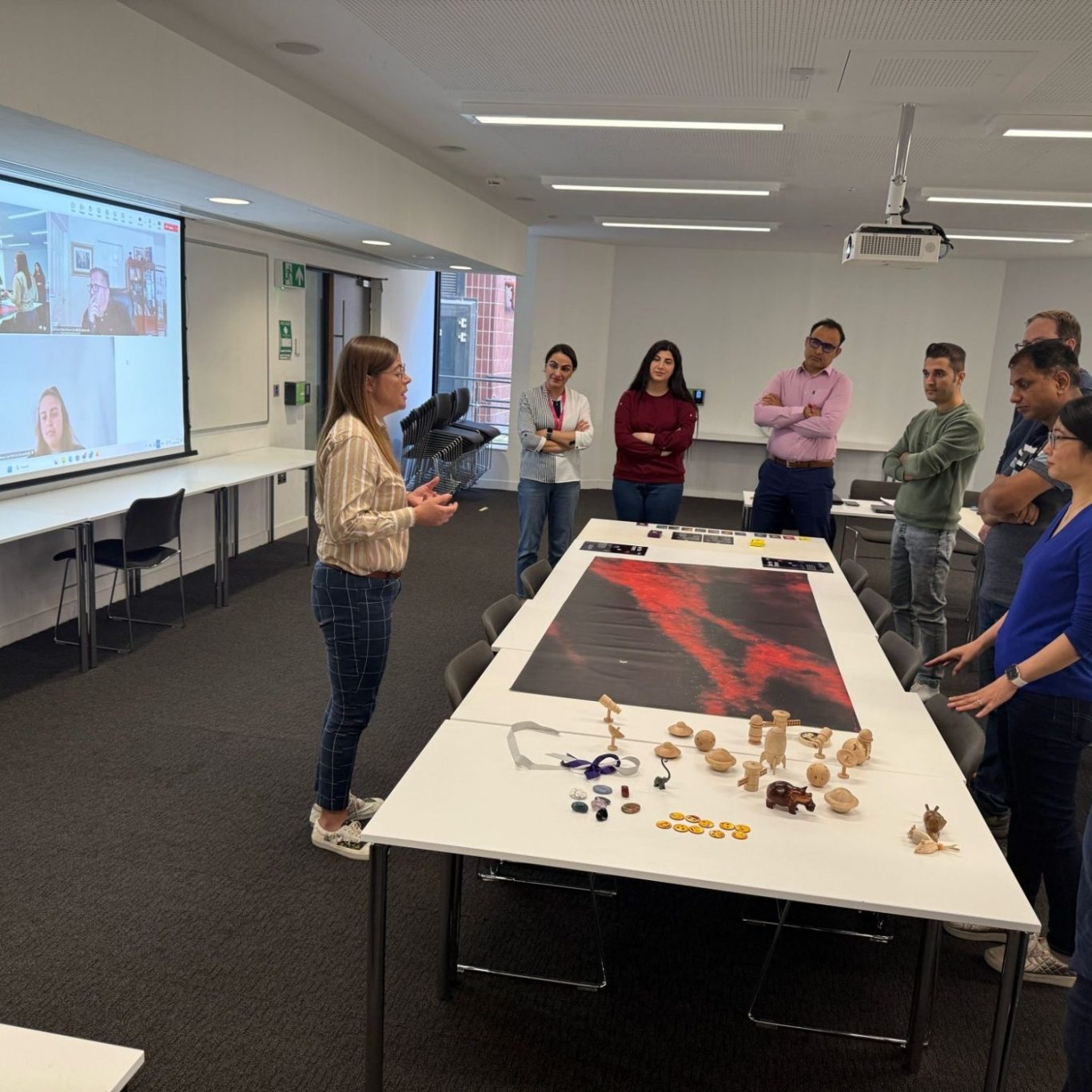
Introducing our unique decision simulation - Strategic Orbits Exercise to AI and Data Science research partners at Hull University.
What I See Now
Today, I work with senior leaders operating at the top of organisations—individuals who are trusted, capable, and outwardly in control.
But the reality behind closed doors is often different. Leaders who:
- Carry constant cognitive load with no switch-off.
- Feel the expectation to decide instantly.
- Move at pace, but with diminishing clarity.
- Know the next level requires a shift—but can’t quite access it.
They don’t lack capability.
They lack space—and control of their internal state within it.
The Cost of Operating on Reaction Alone
In high-performance environments, reactivity is often mistaken for effectiveness.
Fast answers. Constant movement. Immediate decisions. But over time:
- Focus narrows to the urgent.
- Drive becomes depletion.
- Perspective collapses under pressure.
Even the best leaders start to operate tactically rather than strategically.
Because at senior levels, the question is no longer can you perform?
It’s how you think when it matters most.
What High-Stakes Environments Teach You
Across command, central government, and now business, one principle holds:
You cannot always control the situation. But you can control how you meet it.
That requires:
- Awareness of your behavioural patterns under pressure.
- The discipline to pause — even briefly — before acting.
- The ability to separate signal from noise.
This is not about slowing down. It is about creating control at speed.
Where This Shows Up
The leaders I work with often sit at critical points in their organisations:
The Board Executive
Making decisions that shape thousands of lives — calm externally, but carrying unresolved tension internally.
The Senior Director
Relentlessly reliable, but operating close to overload — moving from decision to decision without space to think.
The CEO or Founder
Driving growth, but recognising that scale now requires a different mindset — less reaction, more perspective.
The Transitioning Leader
Stepping into broader influence — where success depends less on execution and more on navigating systems, relationships, and ambiguity.
Across all of them:
Externally composed. Internally stretched.
Self-Awareness: The Real Gateway to the Corner Office
The leaders who sustain performance at the highest levels are not those who avoid pressure. They are those who understand themselves within it.
Self-awareness at this level means:
- Recognising when you are reacting vs responding.
- Understanding how pressure shapes your judgement.
- Knowing how your presence impacts others.
And crucially — knowing how to reset.
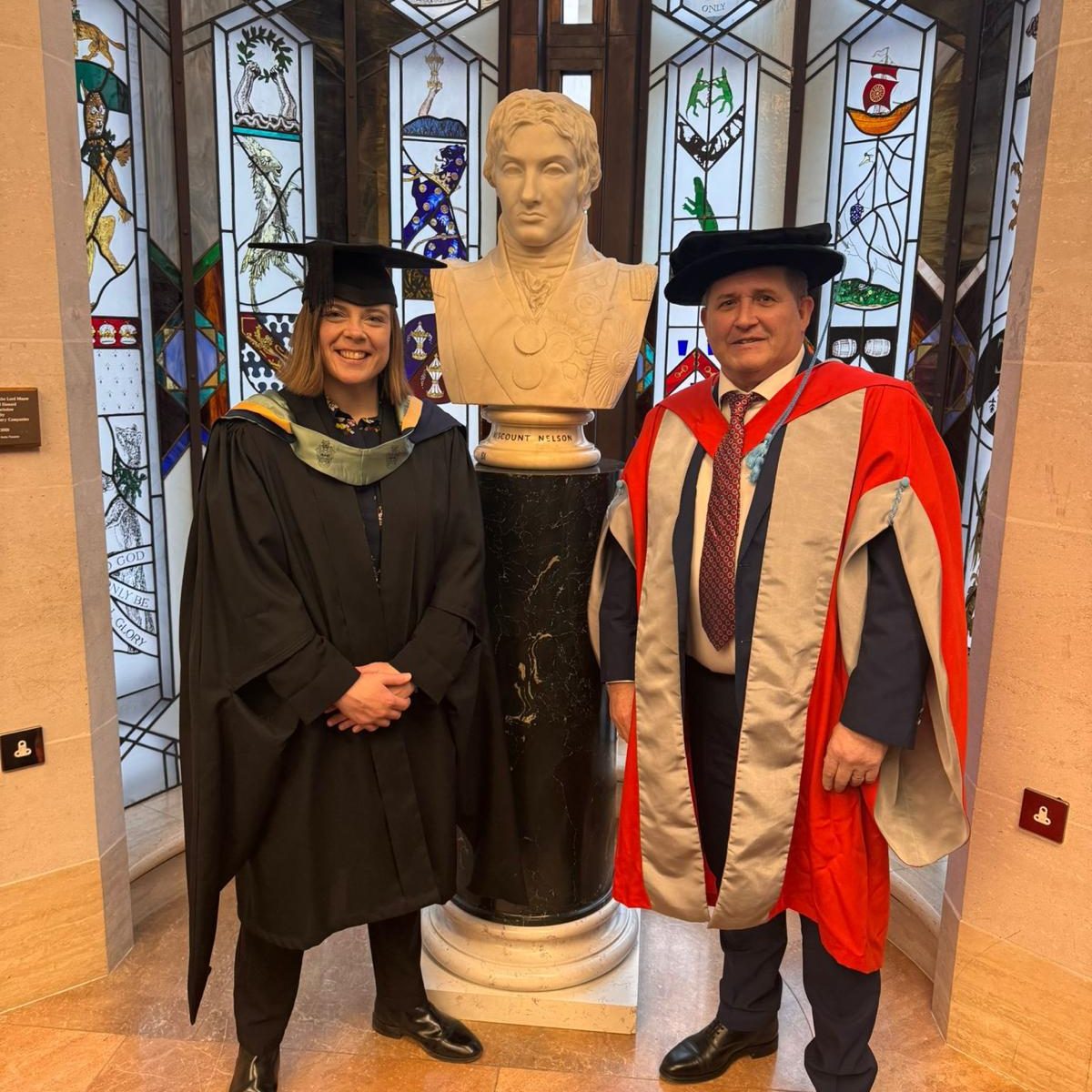
Learning is a lifelong journey of self-awareness. Celebrating graduation of our L7 Action-learning facilitators at London Guildhall with Richard.
A Different Kind of Leadership Work
My work is built on my leadership experience across command, commerce, and the centre of government — supported by behavioural science and applied through action learning.
It is not theoretical. It focuses on helping leaders:
- Find their centre under pressure.
- Build focus without losing perspective.
- Sustain drive without tipping into exhaustion.
- Make faster, better decisions consistently.
The aim is simple:
To help leaders respond with clarity when others react.
A Final Thought
Whether you are addressing Congress, leading an organisation, or making a decision that carries real consequence, the defining question is the same:
Can you hold your centre when it matters most?
How I Work
If you are a high achiever operating at pace — trusted, capable, but aware that the next level requires something different — this is where I can help.
My work is focused on helping leaders:
- Reconnect with clarity and control.
- Build deep self-awareness and self-regulation.
- Operate from a place of grounded confidence, not constant reaction.
- Flourish from who they truly are, not just what they deliver.
This is not about adding more. It’s about stripping back to what matters—and building from there.
If that resonates, I’m always open to a conversation.
Stay safe, and add value. \
The Leadership Alchemist