Saturday 24 January 26
The Strategic Value of Friendship, Motion, and the Outdoors
By The Leadership Alchemist, a performance optimisation expert who believes in ethical intelligence, practical productivity, and the responsible acceleration of human potential.
Most of the leaders I work with are exceptionally good at optimising scarce resources: Time, attention, capital, talent. What’s less often optimised, but arguably just as consequential, is the leader’s own nervous system.
For me, one of the most sustaining practices in a demanding professional life is simple: I go mountain biking regularly with a close friend. No agenda. No slides. No performance metrics. Just effort, conversation, silence, and the unpredictability of terrain. Over time, I’ve come to see this not as a “break” from leadership, but as part of how I stay capable of it.
There is something quietly powerful at the intersection of friendship, physical exertion, and nature; particularly for those carrying the weight of consequential decisions.
Why Friendship Matters More Than We Admit
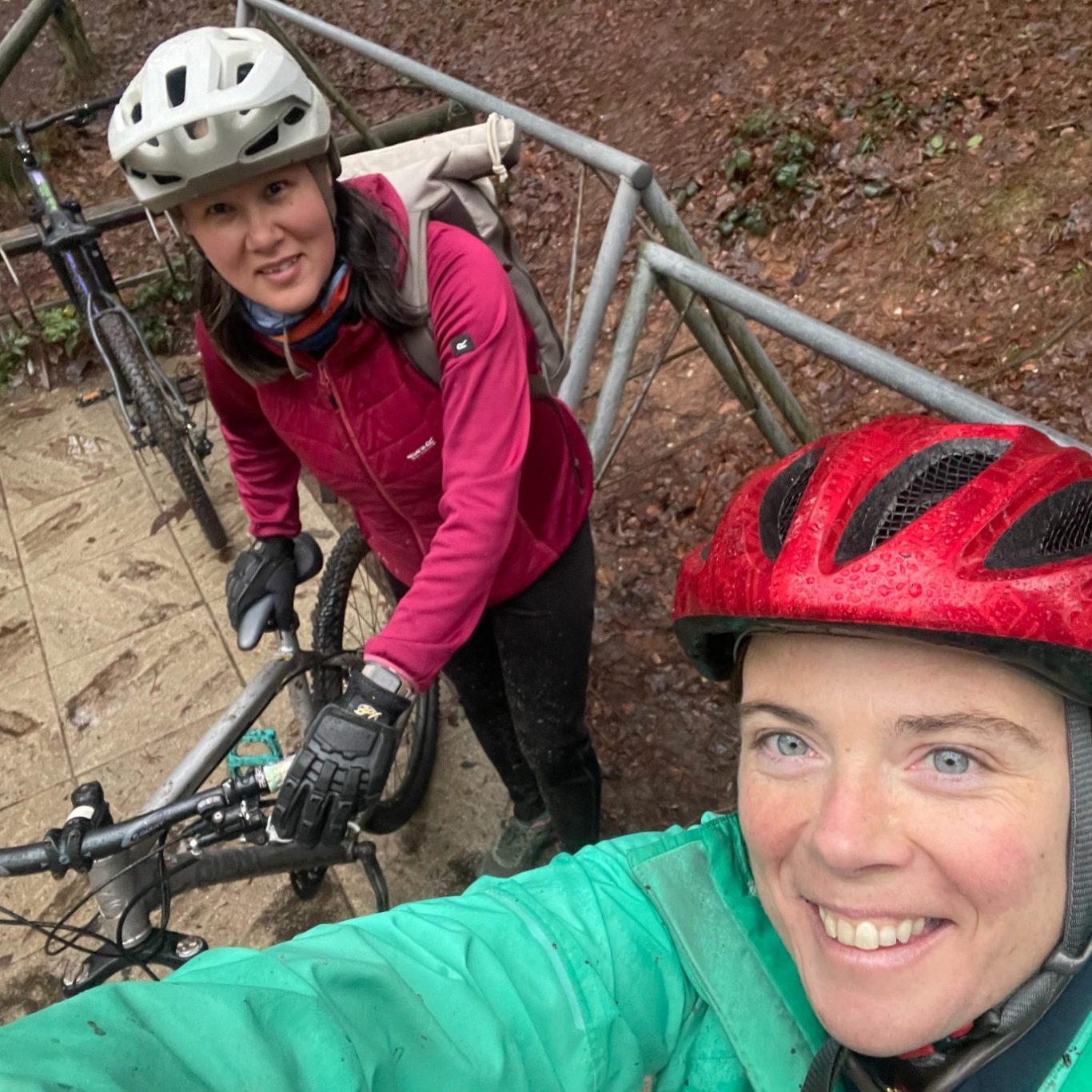
On a recent ride with my good friend and fellow Army Officer, Hazel.
Senior leaders are often surrounded by people, yet experience a narrowing of true peer connection. Power dynamics, confidentiality, and role expectations subtly erode the kind of honest, restorative relationships that buffer stress and recalibrate perspective.
From a behavioural perspective, trusted friendships act as a form of social regulation. When we spend time with someone who knows us outside our role, the nervous system downshifts. Cortisol decreases. Oxytocin increases, reinforcing a sense of trust and safety. This isn’t sentimental; it’s biological.
For leaders, this matters because chronic stress impairs judgment, increases threat-based thinking, and narrows cognitive flexibility. Trusted companionship, especially when it’s embodied and active, creates the conditions for broader perspective and more measured decision-making.
Movement as a Cognitive Reset
Mountain biking (or any demanding physical activity) requires full presence. You cannot simultaneously rehearse a board conversation and navigate uneven terrain at speed. Attention is anchored in the body.
Neuroscience research shows that sustained physical movement increases levels of brain-derived neurotrophic factor (BDNF), which supports learning, memory, and cognitive resilience. Exercise also improves prefrontal cortex functioning, the part of the brain responsible for executive control, impulse regulation, and complex decision-making.
In practical terms: Movement helps leaders step out of reactive loops and back into clearer, more integrative thinking.
I often notice that insights don’t arrive while pushing hardest, but afterwards, during the steady ride back or in the quiet fatigue that follows. This aligns with what we know about insight: Moderate exertion followed by recovery creates fertile ground for synthesis and perspective.
Nature’s Role in Perspective
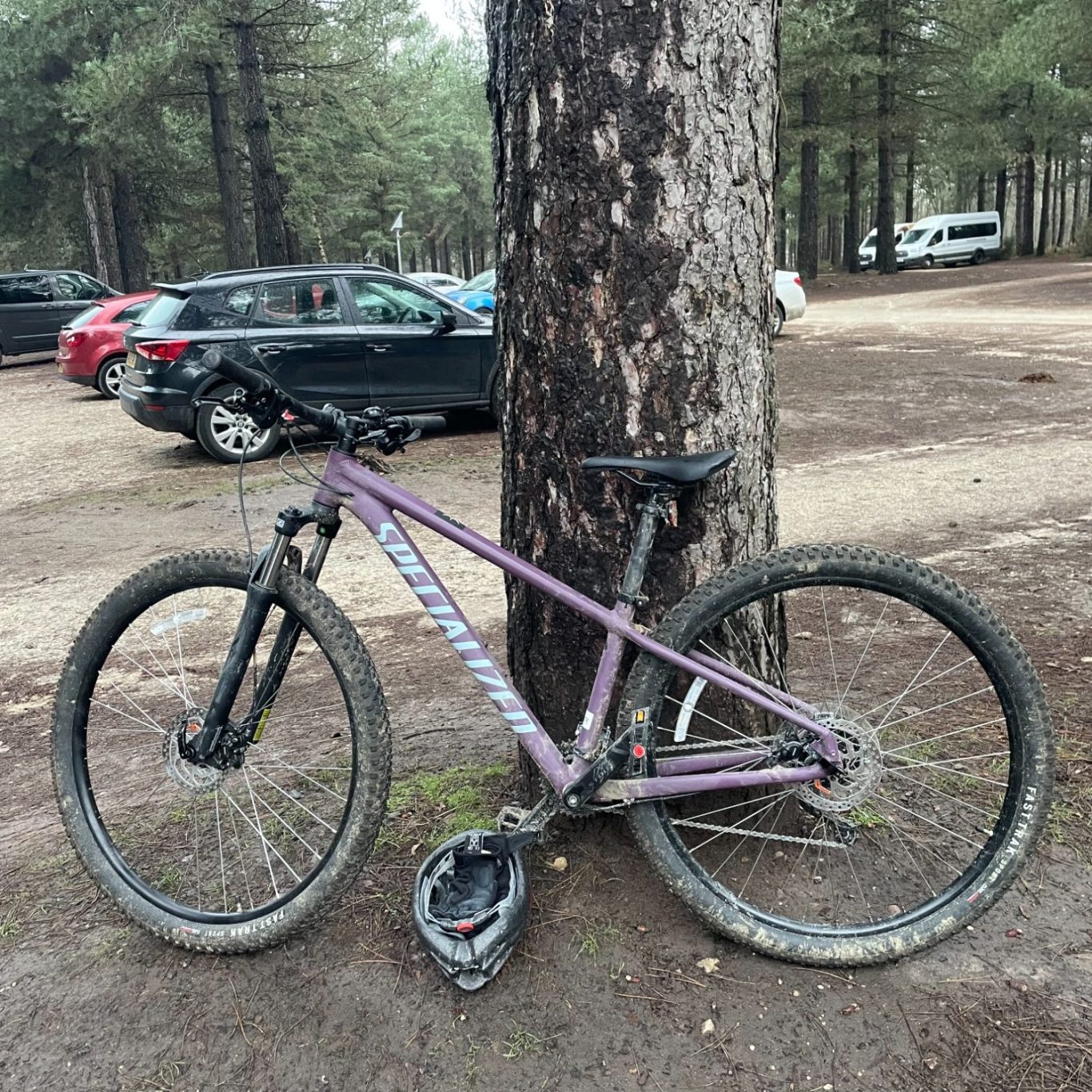
Leaving the car behind and riding in Sherwood Forest.
There is growing evidence that time in natural environments reduces activity in brain regions associated with rumination and self-referential stress. Nature doesn’t just calm us; it reorientates us.
For leaders accustomed to being the focal point of complex systems, nature offers a useful perspective. The trail doesn’t care about your title. Weather, terrain, and gravity impose a different hierarchy; one that rewards attentiveness, adaptability, and humility.
This matters because perspective is not purely cognitive. It is embodied. Leaders who regularly experience environments larger than themselves tend to make decisions with longer time horizons and a stronger sense of proportion; qualities increasingly rare under sustained pressure.
The Power of Shared Effort
Doing this kind of activity with a friend amplifies its impact. Shared physical challenge builds what psychologists call communal coping; a sense that effort, uncertainty, and recovery are not carried alone.
Conversations that happen side-by-side, in motion, often have a different quality. They are less performative. Less defended. Silence is allowed. Advice is optional. Presence is enough. For many senior leaders, this becomes one of the few spaces where they are not managing outcomes or impressions; just navigating the path together.
A Leadership Practice, Not a Luxury
It’s tempting to frame these experiences as indulgent or peripheral. In reality, they are a form of leadership infrastructure.
Regular immersion in friendship, movement, and nature:
- Regulates the stress response
- Supports executive function and learning
- Restores perspective and proportionality
- Reinforces identity beyond role and performance
In a world that rewards relentless output, these practices sustain capacity, the ability to think clearly, decide well, and lead over time.
A Quiet Call to Action for Senior Leaders
For C-suite leaders and business owners, the question is rarely whether you can keep going under pressure. Most of you already have. The more strategic question is whether your current rhythms are actively supporting the quality of decisions you’re entrusted to make.
I encourage executive teams and individual leaders to treat nervous system health, trusted peer connection, and embodied recovery not as personal hobbies, but as leadership essentials. Ask yourself and each other some honest questions:
- Where in my week do I fully disengage from role and performance?
- Who knows me well enough to challenge and steady me outside the organisational hierarchy?
- What practices reliably return me to clarity and perspective before high-stakes decisions?
In my work with senior leaders, these questions increasingly sit at the centre of leadership development, succession planning, and strategic offsites; not as wellness add-ons, but as core enablers of judgment, resilience, and long-term effectiveness.
If you’re interested in exploring how your leadership rhythms, decision-making capacity, and relational ecosystems are either supporting or constraining your performance at the top, I invite you to start a conversation. The most impactful leadership work often begins not with another framework, but with creating the conditions in which better thinking and leadership can actually occur.
Stay safe, and add value. \
The Leadership Alchemist