Friday 29 October 2026
From the Battlefield to the Boardroom: Why Operational Experience is Becoming a Strategic Advantage
By The Leadership Alchemist, a performance optimisation expert who believes in ethical intelligence, practical productivity, and the responsible acceleration of human potential.

One of the few images I have of my frontline service: Soldier first, then Officer. We were generally too busy for photo opportunities! Working in some of the most dangerous and contested environments in the world defined my approach to authentic leadership, empathy and teamwork.
The Leadership Alchemist | Leadership, Strategy & Organisational Performance
In a world defined by uncertainty, the leaders best equipped to shape the future may be those who have already learned to operate when the future is impossible to predict.
For much of the corporate world, operational experience has occupied an awkward position in the leadership hierarchy. It has been respected as evidence of competence, valued for execution and sometimes celebrated as a prerequisite for senior management. Yet it has not always received the strategic recognition it deserves.
The emphasis has frequently fallen on those who formulate strategy, allocate capital, interpret markets and articulate organisational vision. The people responsible for translating those ambitions into reality have too often been positioned downstream of strategic decision-making.
That distinction is becoming increasingly difficult to sustain.
In today's interconnected, volatile and technologically accelerated economy, the distance between strategy and execution is not merely an organisational inconvenience. It is a source of commercial risk.
Geopolitical instability, fragile supply chains, technological disruption, shifting customer expectations and persistent economic uncertainty are forcing organisations to reconsider what effective leadership actually requires. The challenge is no longer simply to design an intelligent strategy. It is to make sound decisions when assumptions break down, resources become constrained, information is incomplete and consequences unfold faster than traditional planning cycles can accommodate.
This is where operational experience - particularly experience gained in frontier, austere or highly uncertain environments - becomes strategically significant.
The central proposition is straightforward: Operational experience is not simply the ability to deliver a plan. It is the ability to understand what reality demands when the plan no longer works.
The changing economics of leadership
The World Economic Forum's Future of Jobs Report 2025 provides a useful indication of how employer expectations are evolving. Analytical thinking remains the most frequently identified core skill, with approximately seven in ten employers considering it essential. Resilience, flexibility and agility, alongside leadership and social influence, also feature prominently.
The report further identifies technological literacy, creative thinking, curiosity and lifelong learning as increasingly important capabilities. Its findings suggest that organisations need people who can combine intellectual rigour with adaptability and effective human judgement.
Source: World Economic Forum, Future of Jobs Report 2025.
These findings matter because they describe a combination of capabilities that operationally experienced leaders often develop through practice: Interpreting incomplete information, making consequential decisions, co-ordinating people and resources, and adapting without losing sight of the intended outcome.
There is, however, an important distinction between possessing these capabilities individually and being able to integrate them under pressure.
A leader may demonstrate excellent analytical ability in a controlled environment. Another may be highly persuasive in a boardroom. A third may be proficient in financial modelling or strategic planning. The real test comes when these capabilities must operate simultaneously, against a shifting set of constraints and with limited time to deliberate.
Operational experience provides a demanding environment in which that integration can be developed.
It teaches leaders to recognise that strategy is not a static intellectual exercise. It is a series of judgements, trade-offs, resource decisions and human interactions made in pursuit of an objective.
In unstable markets, that distinction becomes commercially material.
Frontier environments as laboratories of leadership
The term frontier environment can evoke military deployments, humanitarian emergencies, expeditionary operations or geographically remote and resource-constrained settings. It can also describe emerging markets, complex infrastructure programmes, crisis response operations and businesses attempting to establish themselves in unfamiliar or rapidly changing conditions.
What unites these environments is not necessarily geography or danger. It is the nature of the operating challenge.
Frontier environments frequently combine several characteristics:
Incomplete, ambiguous or rapidly changing information.
Limited resources and competing priorities.
Interdependence between teams, partners and stakeholders.
Material consequences for poor decisions.
The need to balance immediate requirements against longer-term objectives.
A requirement to adapt whilst maintaining accountability.
Such conditions expose the limitations of leadership models that depend excessively on predictability, positional authority or the assumption that adequate planning can eliminate uncertainty.
They also create opportunities to develop a more practical form of intelligence: The ability to interpret a situation, determine what matters most, mobilise people and resources, and learn quickly from the consequences of action.
This is not an argument that operating in a frontier environment automatically makes someone an exceptional leader. Experience alone does not guarantee sound judgement, ethical conduct or strategic insight. Some individuals become more capable through difficult experiences; others simply become more familiar with the same difficulties.
The differentiator is reflective practice: The ability to extract principles from events, examine one's own assumptions and transfer learning into new contexts.
That qualification is important. Businesses should not romanticise adversity or mistake exposure to risk for evidence of leadership capability. They should instead identify the specific competencies developed through demanding operational roles and assess how those competencies can create value in a commercial setting.
Six capabilities that frontier operators bring to an unstable market
1. Decision-making under uncertainty
Traditional management processes often seek to reduce uncertainty before a decision is made. This is sensible where time, data and resources permit. In practice, however, waiting for certainty can itself become a costly decision.
Operational leaders learn to distinguish between what is known, what is assumed, what remains unknown and what must be established through action.
They can make proportionate decisions with imperfect information, identify the consequences of being wrong and determine which assumptions require immediate testing.
This is closely related to the concept of bounded rationality developed by Herbert A. Simon. Simon demonstrated that decision-makers operate within limits of information, cognitive capacity and time, meaning that real-world decisions rarely resemble the perfectly informed optimisation models often used in theory.
Commercial application: Market entry, crisis management, investment decisions, supply-chain disruption and product launches all require leaders to act before every variable is known. The advantage lies not in eliminating uncertainty, but in making disciplined decisions whilst managing it.
2. Adaptive execution and strategic flexibility
An operational plan is a hypothesis about how an objective can be achieved under a given set of conditions. When those conditions change, the plan must be reassessed.
Leaders with strong operational experience understand the difference between remaining committed to an objective and becoming attached to a particular method.
They know when to persevere, when to change direction and when the evidence justifies abandoning an approach altogether.
This aligns with the work of Ronald Heifetz and colleagues on adaptive leadership, which distinguishes challenges that can be resolved through existing expertise and procedures from those requiring learning, experimentation and changes in behaviour.
Further reading: Harvard Kennedy School, Adaptive Leadership.
Commercial application: Organisations navigating technological disruption or changing customer demand need leaders who can translate strategic intent into action while continuously testing whether their assumptions remain valid.
Operational experience helps bridge the gap between strategic ambition and adaptive execution.
3. Resourcefulness and commercial stewardship
Constraints reveal the quality of management.
When resources are abundant, organisations can compensate for inefficient processes, duplicated effort and weak prioritisation. Under pressure, those weaknesses become visible.
Frontier operators are often required to make explicit choices about time, personnel, equipment, funding and competing objectives. They must understand not only what is desirable, but what is essential, what can be deferred and what must be protected.
This develops a practical appreciation of opportunity cost.
It also encourages leaders to think in terms of capability rather than simply headcount or budget. The question becomes: What combination of resources, relationships and decisions will deliver the greatest operational effect?
Commercial application: In a market characterised by constrained investment, margin pressure or rising costs, this capability can improve capital allocation, operating efficiency and organisational resilience. The objective is not indiscriminate cost-cutting. It is the disciplined deployment of scarce resources against the outcomes that matter most.
4. Situational awareness and systems thinking
An operational problem rarely exists in isolation.
A delay in one part of a supply chain can affect customer commitments, working capital, workforce utilisation and reputation. A seemingly local decision can create consequences elsewhere in an organisation.
Experienced operators often develop an instinct for these interdependencies because they have witnessed the practical consequences of decisions made without sufficient regard for the wider system.
This connects with systems thinking, which examines relationships, feedback loops and the ways individual components interact to produce wider outcomes.
Peter Senge's The Fifth Discipline helped establish systems thinking as an important approach to organisational learning and management.
Commercial application: Leaders who can see beyond departmental boundaries are better positioned to identify emerging risks, anticipate unintended consequences and co-ordinate responses across functions. They are also more likely to recognise when an apparently successful local optimisation is damaging overall business performance.
5. Human leadership, trust and collective performance
Operational effectiveness is ultimately achieved through people.
In demanding environments, leadership cannot rely indefinitely on formal authority. People need to understand the purpose of the mission, trust the judgement of those directing it and believe that their contribution matters.
This requires clear communication, emotional regulation, accountability and the ability to maintain collective focus under pressure.
It also requires humility. The leader who listens to frontline knowledge may identify a problem earlier than the leader who assumes that authority provides superior situational understanding.
Amy Edmondson's research on psychological safety is particularly relevant here. Her work demonstrates the importance of creating conditions in which people can raise concerns, ask questions and report mistakes without disproportionate interpersonal risk.
Further reading: Edmondson, A. (1999), “Psychological Safety and Learning Behaviour in Work Teams,” Administrative Science Quarterly.
Commercial application: In unstable conditions, organisations need teams that surface bad news early, challenge flawed assumptions and collaborate across boundaries. Leaders who combine clear standards with psychological safety can improve the quality of information reaching decision-makers and strengthen organisational learning.
6. Resilience, recovery and learning
Resilience is often misunderstood as the ability to endure hardship without complaint. That interpretation is incomplete.
For organisations, resilience is the capacity to absorb disruption, respond effectively, recover and adapt without losing essential capability.
For individuals, it involves managing pressure, recognising limitations, maintaining perspective and learning from setbacks.
Operational experience can develop these qualities, but the lesson is not that leaders should simply tolerate more stress. It is that they should become better at distinguishing manageable friction from systemic failure, recognising when intervention is necessary and building conditions that reduce the likelihood of repeated breakdowns.
The World Economic Forum's emphasis on resilience, flexibility and agility reinforces the relevance of these capabilities to the changing world of work.
Commercial application: Resilient leaders can help organisations prepare for multiple scenarios, establish practical contingencies and respond to unexpected events without confusing urgency with panic. They also understand that recovery should result in improved capability, rather than a return to the same vulnerabilities that produced the disruption.
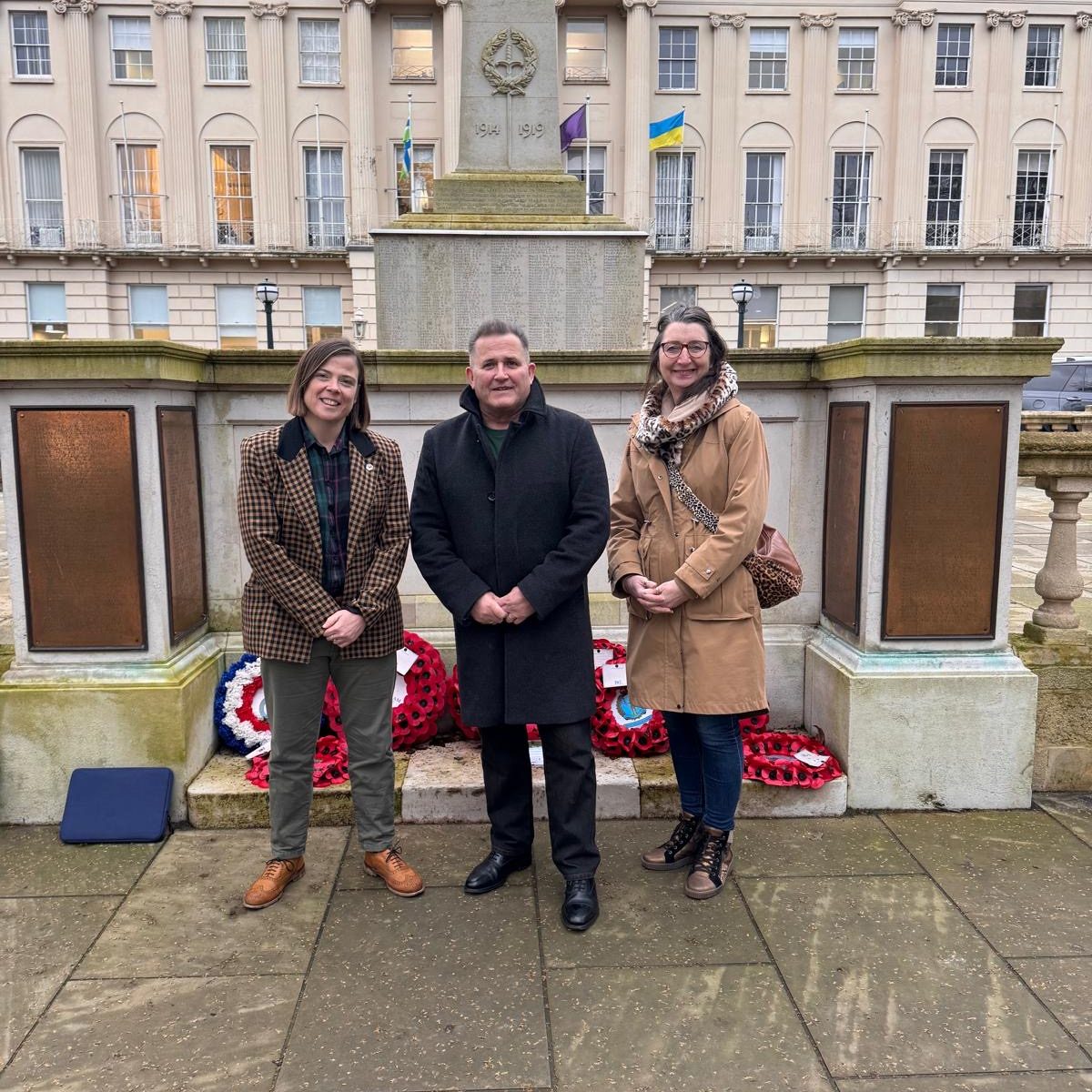
I owe every success that I have experienced in corporate and business environments to the teams I have been privileged to live and work alongside; both military and non-military. Shared values, innovation and client-focus are the ties that bind, no matter the context.
From operational competence to strategic influence
If operational experience has such considerable potential, why has it not always translated into greater influence at executive and board level?
Part of the answer lies in how organisations recognise expertise.
Corporate leadership pipelines often reward visible indicators of strategic sophistication: Financial performance, consulting credentials, executive exposure and the ability to communicate convincingly in formal decision-making settings.
Operational capability can be harder to measure. Its value may be most apparent in problems prevented, risks identified early, teams that remain effective under pressure and decisions that preserve future options.
These contributions can be less visible than a major acquisition or a transformation programme, even when they are fundamental to its success.
There is also a translation problem.
Operational leaders may describe what they did, the challenges they faced and the outcomes they delivered without articulating the underlying commercial principles. Conversely, executives may recognise those principles in theory without appreciating how difficult they are to apply in practice.
Bridging this gap requires a deliberate shift.
Operational leaders must learn to express their experience in the language of business value: Risk-adjusted returns, strategic optionality, customer outcomes, organisational capability, capital efficiency and sustainable performance.
Equally, businesses must broaden their definition of strategic talent. The ability to formulate strategy matters, but so does the ability to determine whether that strategy is executable, what conditions could invalidate it and how the organisation should respond when reality diverges from expectation.
The most effective leadership teams combine both perspectives.
They bring together analytical depth and practical judgement, long-term ambition and short-term awareness, structured governance and the capacity to act decisively when circumstances demand it.
The goal is not to replace conventional corporate expertise with operational experience. It is to integrate the two.
Command to Commerce: Translating experience into business value
This relationship between operational experience and commercial leadership is one of the reasons I believe the conversation deserves greater attention.
Through Command to Commerce, I explore the transition from demanding operational environments into the world of business, leadership and enterprise. The important question is not simply how people move between sectors, but what they carry with them - and how that experience can be translated into meaningful commercial contribution.
In the recent episode featuring Erin, the conversation offers a further opportunity to explore this territory through the perspective of someone who has navigated the relationship between experience, leadership and business.
Listen to the conversation: (COMMAND TO COMMERCE EPISODE LINK).
The wider point is that career transitions should not be viewed solely as changes of occupation. They can represent the transfer of capabilities between environments that appear different on the surface but share underlying challenges.
A leader who has coordinated teams under severe constraints may bring valuable insights into operational risk, organisational design and resource allocation. Someone accustomed to making decisions with incomplete information may contribute to strategy development in uncertain markets. An individual who has learned to establish trust across diverse teams may strengthen collaboration in complex organisations.
These are not automatic advantages, nor are they exclusive to people with military or frontier experience. They are capabilities that must be demonstrated, contextualised and developed.
But when organisations know how to recognise them, they can access a wider pool of leadership talent and challenge conventional assumptions about what executive readiness looks like.
The opportunity is particularly relevant for businesses facing rapid transformation, where established experience remains valuable but must be combined with new perspectives and the willingness to learn.
What business leaders should do differently
If operational experience is to become a more meaningful source of strategic advantage, organisations must move beyond celebrating resilience in principle and begin integrating operational learning into leadership practice.
Five actions are particularly important.
Firstly, assess capability rather than pedigree. Recruitment and succession processes should examine how candidates make decisions, manage trade-offs, learn from failure and mobilise teams under pressure. The context of their experience matters, but demonstrated judgement matters more.
Secondly, bring operational insight into strategy formation. Operational leaders should be involved early in strategic discussions, not simply asked to implement decisions made elsewhere. Their understanding of constraints, dependencies and execution risk can materially improve the quality of strategic choices.
Thirdly, develop scenario-based leadership. Leaders should practise responding to changing assumptions, disrupted supply chains, resource constraints and competing stakeholder demands. The objective is not to predict every crisis, but to improve the organisation's capacity to recognise and respond to change.
Fourthly, institutionalise learning. After-action reviews, structured reflection and cross-functional learning can turn individual experience into organisational capability. Lessons should inform processes, incentives and decisions rather than remain confined to the memories of those involved.
Finally, connect resilience to measurable outcomes. Organisations should evaluate how well they anticipate disruption, preserve critical operations, recover performance and learn from unexpected events. Resilience should be treated as an operational and strategic capability, not simply a desirable personal characteristic.
Together, these measures help transform experience into an organisational asset.
The leadership challenge ahead
The commercial environment is not becoming uncertain for the first time. Businesses have always faced changing markets, competitive threats and unforeseen events. What is changing is the interaction between these pressures and the speed at which they can propagate across interconnected systems.
The challenge for leaders is therefore not to abandon planning, governance or strategic discipline. It is to recognise their limitations when assumptions change and to build organisations capable of adapting without losing coherence.
Operational experience has a distinctive contribution to make here.
It can develop the judgement to act without complete information, the discipline to allocate resources against clear priorities, the awareness to recognise interdependencies, and the leadership required to maintain trust and collective performance under pressure.
Yet these capabilities create value only when they are understood and applied. Experience must be interrogated, lessons must be transferable, and operational judgement must be connected to commercial objectives.
This is where leadership development, organisational learning and talent strategy intersect.
The organisations best positioned to navigate unstable markets may be those that recognise leadership potential beyond traditional career pathways and bring together people who can think strategically with those who understand what it takes to deliver under difficult conditions.
The future belongs neither exclusively to the strategist nor to the operator.
It belongs to leaders who can move between the two: people who understand the wider system, recognise the practical realities, make informed decisions and turn strategic intent into sustainable outcomes.
That is the deeper value of operational experience. It is not simply a record of what someone has done. It is a potential source of judgement about what to do next.
And in a world where the operating environment can change faster than the strategy, that judgement is becoming an increasingly important business asset.
References and further reading
World Economic Forum. (2025). The Future of Jobs Report 2025. Particularly relevant for its analysis of analytical thinking, resilience, agility, leadership and the changing demand for skills. https://www.weforum.org/publications/the-future-of-jobs-report-2025/
Simon, H. A. (1955). “A Behavioural Model of Rational Choice.” The Quarterly Journal of Economics, 69(1), 99–118. A foundational account of bounded rationality and the limits of decision-making under conditions of incomplete information. https://doi.org/10.2307/1884852
Heifetz, R. A., Grashow, A., & Linsky, M. (2009). The Practice of Adaptive Leadership: Tools and Tactics for Changing Your Organization and the World. Harvard Business Press. A practical framework for distinguishing technical problems from adaptive challenges.
Edmondson, A. (1999). “Psychological Safety and Learning Behaviour in Work Teams.” Administrative Science Quarterly, 44(2), 350–383. Research on the relationship between psychological safety and team learning. https://doi.org/10.2307/2666999
Senge, P. M. (1990). The Fifth Discipline: The Art and Practice of the Learning Organization. Doubleday. A foundational text on systems thinking, organisational learning and the relationships that shape performance.
Bennett, N., & Lemoine, G. J. (2014). “What VUCA Really Means for You.” Harvard Business Review, 92(1/2), 27–42. A useful framework for understanding volatility, uncertainty, complexity and ambiguity as distinct leadership challenges.
Stay safe and add value.
The Leadership Alchemist