Friday 25th September 26
Heart-Centred Leadership: Leading People When the Environment Is Anything but Simple
By The Leadership Alchemist, a performance optimisation expert who believes in ethical intelligence, practical productivity, and the responsible acceleration of human potential.
There is a leadership myth I have encountered repeatedly throughout my career: The harder the environment, the harder the leader must become.
I understand where it comes from; in defence, in frontier environments, in warzones and in the uncertain terrain of crisis and post-conflict reconstruction, decisions can carry extraordinary consequences. Time is compressed. Information is incomplete. Resources are constrained. People are tired. Relationships matter. Trust can determine whether a plan succeeds or fails.
But after years of leading and working in complex and contested environments, I have come to believe something rather different: The more challenging the environment, the more important it becomes to remain human.
For me, that is the essence of heart-centred leadership. It is not soft leadership. It is not about avoiding difficult conversations, accountability or hard decisions. Nor is it about putting feelings ahead of purpose. It is about recognising that leadership is ultimately exercised through human beings; and that the quality of the human connection between the leader and the led can profoundly influence how people think, decide, adapt and perform.
The heart is not the opposite of strategy
My career has taken me from military service into wider government, healthcare, the third sector and care, and ultimately into building The Leadership Alchemist. The environments may look very different on paper: a military operation is not an NHS system, a post-conflict reconstruction programme is not a care organisation and a government crisis response is not a third-sector transformation project. Yet beneath the different language, structures and operating models, I have repeatedly encountered the same leadership challenge: How do we enable people to perform at their best when the environment around them is uncertain? The answer is rarely found in another spreadsheet, process map or command structure. It starts with people.
My experience of leading in high-risk and contested environments taught me to pay attention to what is happening under the bonnet. What is being said? What is not being said? Who has stopped contributing? Where is trust weakening? Where are assumptions becoming embedded? What pressures are people carrying that are invisible from the org chart? These questions have become central to my leadership practice and are why I believe that heart-centred leadership is not a departure from strategic leadership, but a deeper form of it.
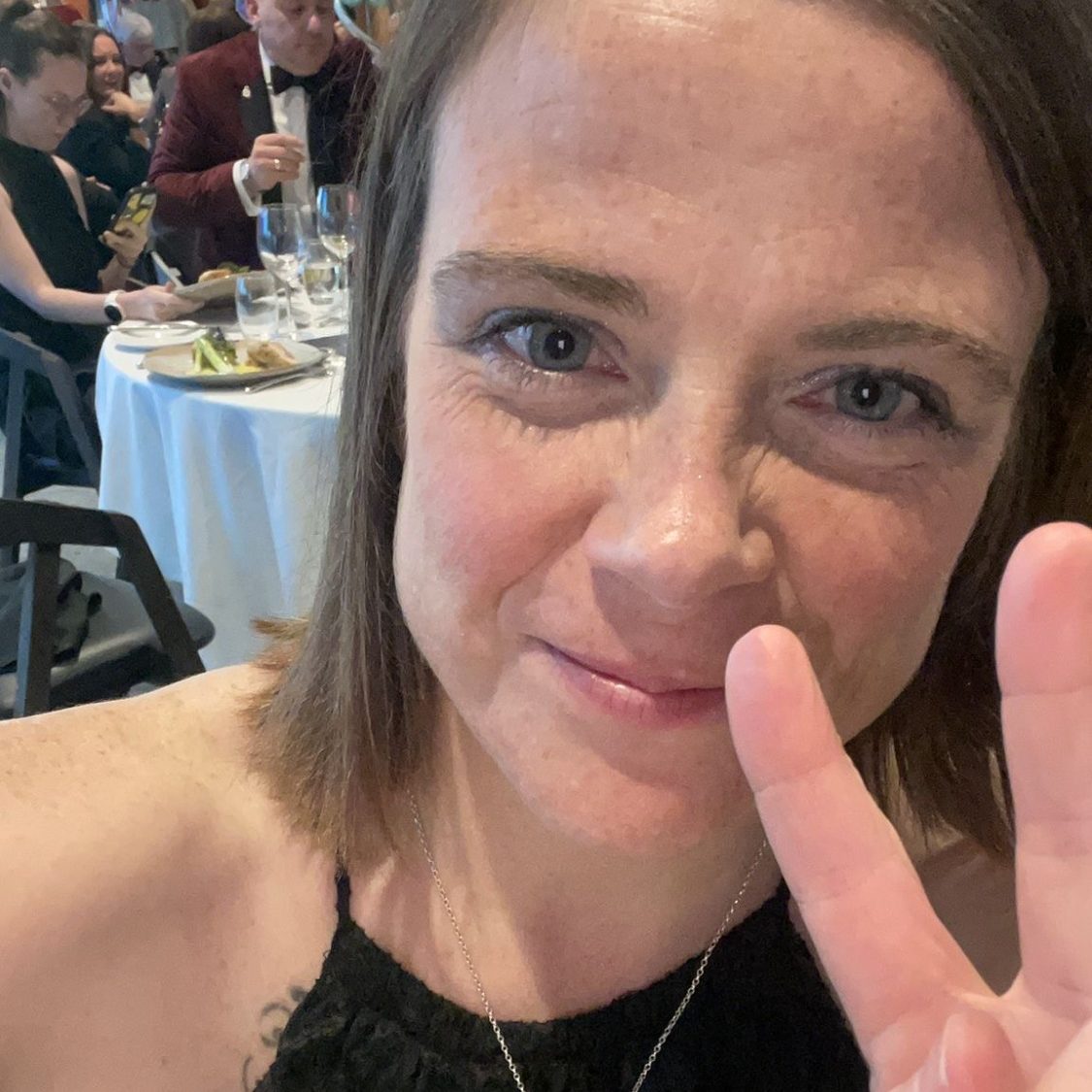
Supporting fellow Veterans in transition and military colleagues at a charity event in Manchester this year reminded me how powerful heart-centred connections are.
Compassion is an operational capability
There is now substantial recognition within health and care that compassion is not simply a desirable personal characteristic. The NHS Leadership Framework explicitly connects compassionate leadership with care, understanding, empathy, wellbeing, honest conversations and accountability. NHS England's leadership frameworks similarly place compassionate, inclusive and positive cultures alongside strategy, transformation, collaboration and sustainable outcomes. This matters because compassion is sometimes misunderstood as simply being nice but it is considerably more demanding than that.
Professor Michael West's work on compassionate leadership describes four behaviours: attending, understanding, empathising and helping. I find that framework particularly powerful because it moves compassion from an intention into an action.
We have to pay attention to what is actually happening for people. We have to seek to understand what is causing the difficulty. We have to consider what the experience may feel like from another person's perspective. And then, crucially, we have to ask what we can do that will genuinely help. Heart-centred leadership is therefore not simply feeling for people, it is doing something useful because you understand people.
What conflict environments taught me about people
Some of the most important leadership lessons I have learned were not taught in a classroom, they were learned in environments where uncertainty was not theoretical. When you operate in conflict or frontier environments, hierarchy can get you started, but it cannot sustain you indefinitely. People have to trust one another, communicate and tell the truth, including uncomfortable truths. They have to adapt when the plan stops matching reality and they have to know that the person beside them will still be there when circumstances become difficult.
Those experiences profoundly shaped my understanding of leadership, I learned that people do not necessarily need leaders who have every answer. They need leaders who can create enough clarity, trust and psychological safety for the collective to find better answers. That insight is reflected in Amy Edmondson's foundational research on psychological safety, her work identified psychological safety as an important factor associated with team learning behaviour, with implications for team performance. If people are afraid to speak, challenge assumptions, acknowledge uncertainty or admit mistakes, leaders are making decisions with incomplete information. In a complex environment, that is not a leadership strength, it is a vulnerability.
From warzones to the NHS
One of the most interesting aspects of my career has been seeing how transferable these lessons are. Moving between defence, government, NHS environments, the third sector and care has reinforced something for me: different sectors often have different problems, but human needs remain remarkably consistent. People want to matter, be heard, understand the purpose of what they are doing, know that their contribution has value and leaders who will listen when something is going wrong. Particularly during periods of uncertainty, they need leaders who can hold both the mission and the human being in view.
This is highly relevant to healthcare and care, where compassionate and inclusive leadership is increasingly recognised as central to creating cultures in which people can thrive and deliver high-quality care.
My own work across these environments has convinced me that the same principle applies much more broadly. Whether we are talking about a clinician, soldier, civil servant, social care professional, charity leader, transformation team or executive board, performance and humanity are not mutually exclusive objectives.
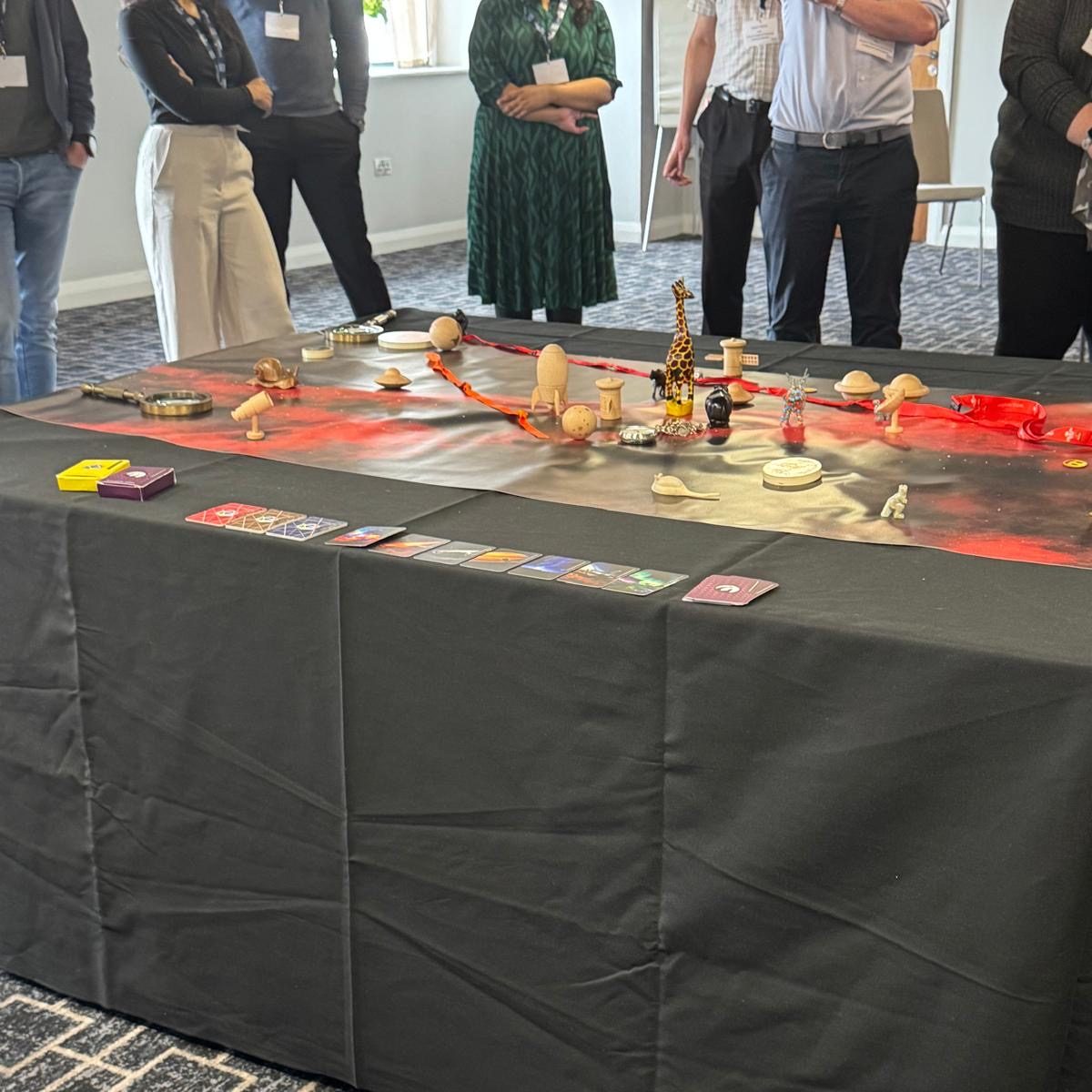
Sharing the Strategic Orbits Exercise with Executive colleagues in the health sector always brings me close to my ‘why’ of empowering systemic change from within in service of faster and better outcomes.
Heart-centred does not mean consequence-free
This is perhaps the most important distinction; a heart-centred leader still has to make difficult decisions. Sometimes the compassionate thing is to say no, challenge someone's behaviour or hold someone accountable. Sometimes it is to stop a course of action that is putting people or the organisation at risk.
The NHS Leadership and Management Framework makes a similar distinction: compassionate leadership involves empathy alongside accountability and the courage to have difficult conversations. That resonates strongly with my experience. In demanding environments, ambiguity about standards can be just as damaging as excessive control. People need to understand what matters, what is expected and what is non-negotiable. But they also need to know that they can speak when something is not right. Heart-centred leadership therefore combines warmth with clarity, it is entirely possible to care deeply about someone and still hold them accountable.
Indeed, sometimes accountability is an expression of care.
The alchemy in leadership
This is where our work as The Leadership Alchemist comes from.
Alchemy is traditionally associated with transformation: taking something with one set of properties and transforming it into something of greater value. We see leadership in a similar way. The raw material is human potential, the environment provides pressure, experience provides heat, reflection provides insight, relationships provide the catalyst and leadership creates the conditions in which transformation can occur.
At The Leadership Alchemist, we draw on decades of experience across defence, healthcare, government, the third sector and complex operational environments to help leaders and organisations navigate uncertainty, make better decisions, develop people and transform systems. Our work includes leadership development, executive coaching, strategic transformation and experiential approaches to complex decision-making, including the Strategic Orbits Exercise®.
But beneath the methodologies, exercises and frameworks is something much simpler: Keeping the human in the loop, because strategy without humanity can become detached from reality and humanity without strategy can become good intention without sufficient impact. The leadership challenge is to bring the two together.
From boots to business
My transition from military service into wider government, healthcare, care and business has reinforced another lesson: we often talk about leadership as though it is something we acquire but I increasingly think it is something we uncover.
The experiences that shape us - including the difficult ones - can become sources of leadership insight if we are prepared to reflect on them. My own journey from military service and deployments into transformation, leadership development and The Leadership Alchemist has been a process of translating experience into something useful for others. That includes helping leaders navigate complexity, uncertainty and change, but also helping people recognise the leadership capability already embedded within their lived experience. The environments and job title may change, the uniform may come off but the lessons about people and leadership remain.
The future of leadership needs more humanity, not less
We are entering an era in which artificial intelligence, automation and data will increasingly influence how organisations make decisions. That makes heart-centred leadership more relevant, not less. The more technology mediates our work, the more important genuinely human capabilities become: judgement, curiosity, empathy, courage, relationship, trust and the ability to make sense of complexity together. Technology can process information. It cannot take responsibility for what matters. Leadership still has to do that. And leadership ultimately happens between human beings.
The question I leave with leaders
After years of working across defence, government, healthcare, care and the third sector - and experiencing environments ranging from conflict and crisis to reconstruction and organisational transformation - I have learned that leadership is rarely about being the strongest person in the room. It is about creating the conditions in which other people can become stronger. That requires strategic thinking, courage, discipline and heart.
Asking yourself "What happens to the people around me because I am their leader?" That, to me, is heart-centred leadership. And perhaps that is the real alchemy.
Let's start a conversation
If something in this resonates with you, I would love to hear from you.
Perhaps you are leading through significant change. Perhaps your organisation is facing complexity that cannot be solved by another conventional leadership programme. Perhaps you are trying to rebuild trust, develop your people, strengthen decision-making or create a culture in which people can perform without losing their humanity. Or perhaps you simply recognise that the leadership conversation needs to change. Let's talk.
I work with leaders, teams and organisations across defence, healthcare, government, the third sector and care who are navigating complexity, uncertainty and transformation. If you would like to explore what heart-centred leadership could mean in your organisation, connect with me, start a conversation or get in touch with The Leadership Alchemist.
Stay safe, and add value. \
The Leadership Alchemist