Thursday 5 March 26
International Women’s Day: Why Diverse Perspectives Strengthen Leadership and Decision-Making
By The Leadership Alchemist, a performance optimisation expert who believes in ethical intelligence, practical productivity, and the responsible acceleration of human potential.
Each year on International Women’s Day (8 March), organisations around the world pause to recognise the achievements of women and reflect on the progress still needed to achieve gender equity. For leadership teams and boards, however, the conversation goes beyond celebration. It raises an important strategic question:
How can organisations ensure that diverse perspectives meaningfully shape the decisions that determine performance, resilience, and long-term value?
In an era defined by uncertainty and complexity, the ability to draw on a wide range of experiences and viewpoints is increasingly linked to better decision-making and stronger financial outcomes.
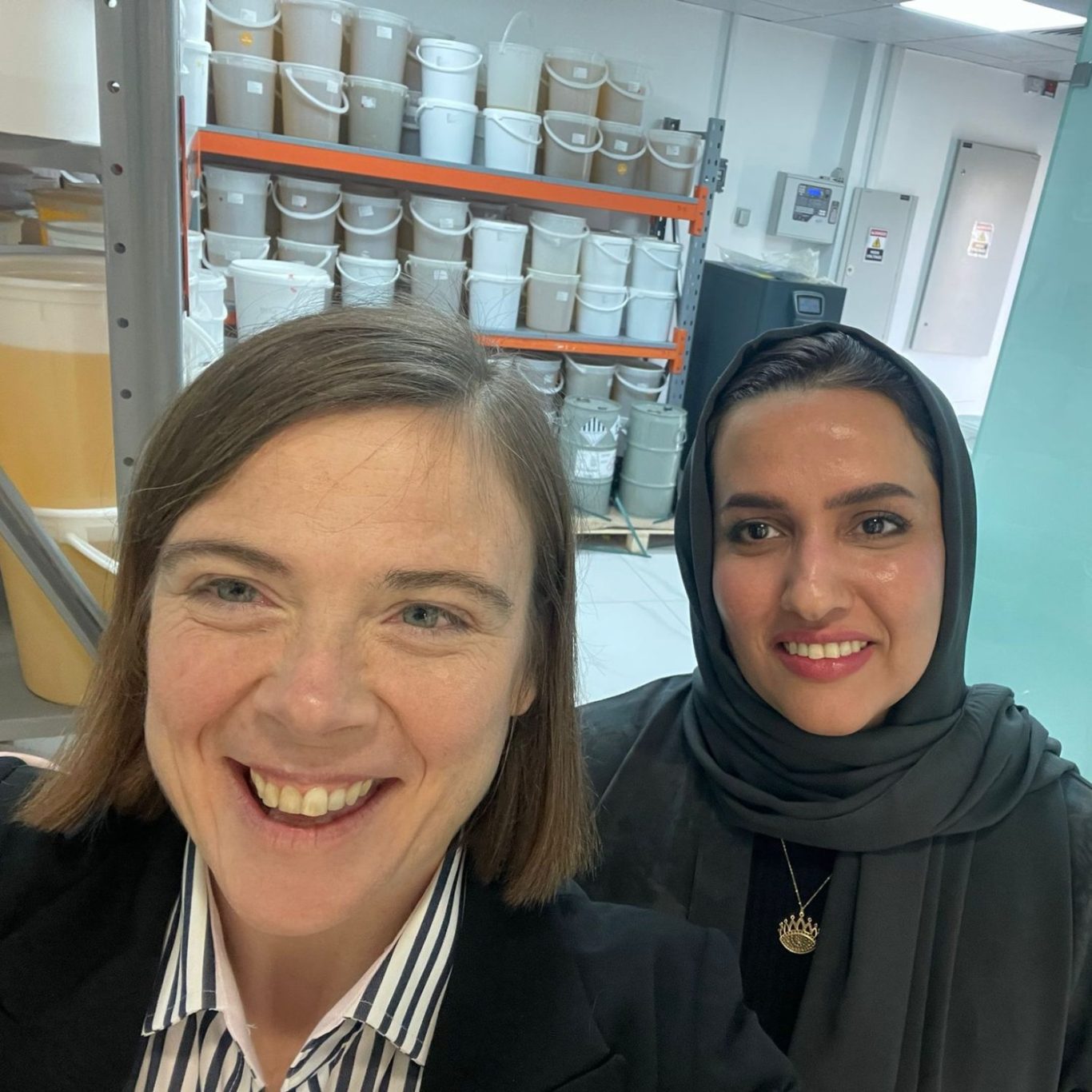
Shell and Reem, the local business development manager and start-up expert at Alula Peregrina; a cosmetics company whose products are made from the peregrina tree, a native tree to the AlUla region of the Kingdom of Saudi Arabia.
The Leadership Challenge of Complexity
Organisations today face a far more interconnected and unpredictable operating environment than even a decade ago. Boards and C-Suites are navigating overlapping transitions: Digital transformation, geopolitical shifts, climate-related risks, technological disruption, and rapidly evolving workforce expectations.
In these conditions, the quality of leadership decisions depends not only on expertise, but also on the breadth of perspectives present in the room.
When leadership teams are composed of individuals with similar backgrounds and experiences, there is a natural tendency towards groupthink. Assumptions go unchallenged, risks may be underestimated, and emerging opportunities can be missed. Diverse leadership teams, by contrast, are more likely to test assumptions, explore alternative viewpoints, and surface insights that improve strategic judgement.
The Boardroom Case for Diversity
For boards and executive teams, the link between diversity and organisational performance is becoming increasingly clear.
Global research highlights several compelling trends:
- Companies in the top quartile for gender diversity on executive teams are about 25% more likely to achieve above-average profitability compared with those in the lowest quartile.
- Organisations with more gender-diverse boards tend to deliver stronger return on equity and better governance outcomes.
- Research analysing thousands of companies globally has found that firms with at least three women on the board show higher average returns on invested capital and improved earnings stability.
- Diverse boards are also associated with more robust risk oversight and more rigorous strategic debate: Both critical capabilities in volatile markets.
These outcomes arise not simply from representation, but from the variety of perspectives diversity introduces into strategic discussions. When leadership teams draw on broader experience across gender, background, and professional pathways, they are better equipped to interpret complex signals and evaluate strategic trade-offs.
Moving Beyond Representation
While progress has been made in increasing the representation of women in leadership roles, representation alone is not enough. The true value of diversity emerges when organisations move from simply including voices to actively integrating diverse perspectives into strategic thinking and decision-making processes.
This requires leadership cultures where:
- Questioning and challenge are welcomed
- Different viewpoints are explored rather than suppressed
- Strategic debate is encouraged
- Decision-making processes allow for reflection and dialogue
These conditions enable diversity to translate into better strategic outcomes rather than symbolic representation.
Leadership Development as an Enabler of Inclusion
One of the most effective ways organisations can strengthen inclusive leadership is through development approaches that emphasise reflection, dialogue, and collaborative problem-solving. Leadership development practices such as facilitated strategic reflection and action-based learning create environments where leaders can explore complex challenges together while drawing on the collective intelligence of the group.
These approaches encourage leaders to:
- Challenge assumptions
- Listen deeply to alternative viewpoints
- Examine systemic implications of decisions
- Learn from experimentation and experience
In doing so, organisations move towards more adaptive and learning-oriented leadership cultures, which are essential in uncertain markets.
Empowerment Through Opportunity
Empowering women in leadership also requires attention to the systems that shape career progression. Mentorship, sponsorship, access to strategic assignments, and targeted leadership development programmes all play an important role in ensuring that talented women have pathways to senior leadership roles.
For boards and senior executives, strengthening diverse leadership pipelines is therefore not only a question of equity; it is also a long-term investment in organisational capability.
A Strategic Moment for Reflection
International Womens’ Day provides an opportunity for organisations to reflect on how leadership is evolving. For many boards and executive teams, the most valuable question is not simply How many women are in leadership positions?
It is: How effectively are we drawing on the full range of perspectives available to us when making critical decisions?
In an increasingly complex world, leadership is becoming less about individual authority and more about collective intelligence.

A female scientist working in the lab at Alula Peregrina.
Looking Ahead
Empowering women in leadership is not only a matter of fairness; it is a strategic investment in stronger decision-making, greater resilience, and more innovative organisations. As organisations look towards the next decade of transformation, those that succeed will be the ones that harness the full spectrum of leadership talent and perspective available to them.
International Womens’ Day is therefore not only a celebration of the contributions of women. It is a reminder that better leadership decisions often begin with broader perspectives in the room.
If your organisation or board is exploring how to strengthen leadership capability, strategic decision-making, or inclusive leadership cultures, I would welcome the opportunity to continue the conversation.
Stay safe, and add value. \
The Leadership Alchemist