Friday 7 August 26
Keeping the Human in the Loop: Why Leadership in the Age of AI Requires More Than Technology
By The Leadership Alchemist, a performance optimisation expert who believes in ethical intelligence, practical productivity, and the responsible acceleration of human potential.
The real competitive advantage in the age of artificial intelligence will not be artificial intelligence. It will be deeply human leadership.
Summer has always been a season that invites reflection.
The pace slows; if only slightly - and creates an opportunity to consider not just what we are doing, but why we are doing it. As organisations prepare for the next financial year, strategic planning cycles and digital transformation programmes, one phrase has become increasingly common in boardrooms and government departments alike:
"Keep the human in the loop."
Most discussions frame this as a technical safeguard. Humans oversee AI-generated outputs, validate decisions and mitigate risk.
Necessary? Absolutely. Sufficient? Not even close.
The real challenge facing today's leaders is not whether humans remain in the decision loop. It is whether leadership itself remains fundamentally human.
The AI Opportunity; and the Leadership Risk
Artificial intelligence is transforming the way organisations operate. It can accelerate analysis, identify patterns, automate routine work and increase productivity at remarkable speed.
Yet the most significant leadership challenges facing governments, businesses and public services remain stubbornly human.
How do we lead through uncertainty?
How do we build trust across increasingly complex stakeholder environments?
How do we encourage innovation without sacrificing accountability?
How do we navigate competing priorities when there is no obvious right answer?
These are adaptive challenges rather than technical ones (Heifetz, Grashow & Linsky, 2009). They cannot simply be delegated to algorithms because they require judgement, ethics, relationships and collective learning.
Technology can provide answers.
Leadership determines which questions matter.
Why Reflection Has Become a Strategic Capability
In many organisations, reflection is mistakenly viewed as a luxury.
In reality, it has become a strategic capability.
Research by Donald Schön (1983) demonstrated that professionals improve performance through reflective practice - thinking critically both during and after action. Peter Senge's work on learning organisations similarly argues that sustainable organisational success depends upon continuous learning rather than static expertise (Senge, 1990).
Today's leaders face an unprecedented volume of information. The limiting factor is no longer access to knowledge.
It is the capacity to make sense of complexity.
Reflection creates that capacity.
It enables leaders to distinguish between urgency and importance, recognise emerging patterns, challenge assumptions and make decisions that align with organisational purpose rather than immediate pressure.
In an AI-driven world, reflection is becoming a competitive advantage.
Resilience Is Not About Working Harder
Another misconception concerns resilience.
Too often resilience is interpreted as endurance. The ability to absorb increasing pressure while maintaining performance.
This is both unsustainable and incomplete.
Contemporary research suggests that resilience is relational, developmental and systemic rather than purely individual (Southwick et al., 2014).
The most resilient organisations create cultures where people think together, challenge constructively, learn continuously and adapt collectively.
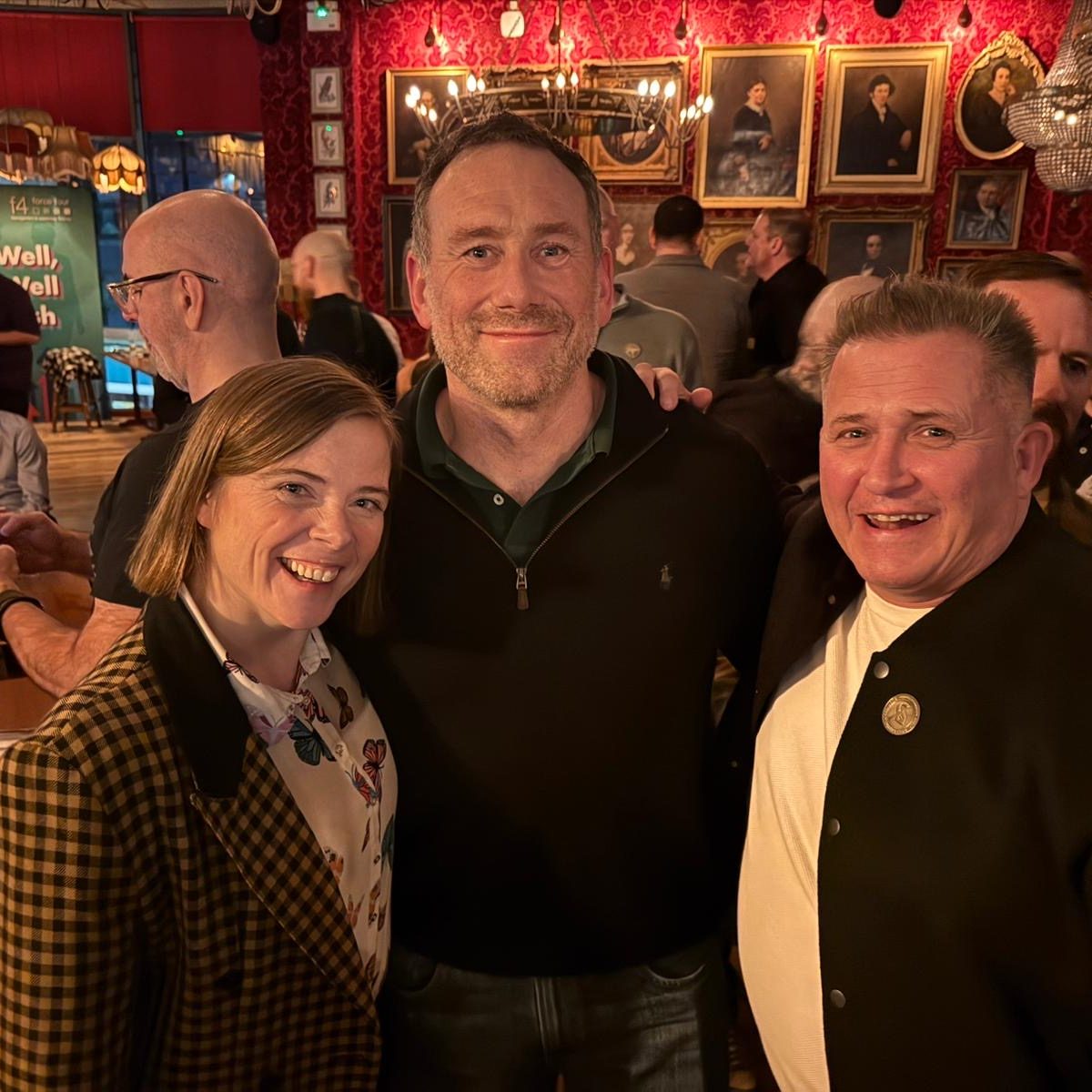
Members of our Defence community at a recent Transition Practice event, building a stronger community together around career transition.
Resilience emerges from connection. Not exhaustion.
This distinction matters because organisations cannot innovate if their people are permanently operating in survival mode.
Leadership as Collective Learning
At the Leadership Alchemist, my work is founded on a simple principle:
Better conversations create better decisions.
Whether supporting executive teams, government leaders or organisational partnerships, sustainable change rarely begins with a new framework.
It begins with new thinking.
This is why Action Learning remains one of the most powerful yet underutilised leadership methodologies available today.
Developed by Reg Revans, Action Learning enables leaders to work on real organisational challenges through disciplined questioning, reflective dialogue and collective accountability.
Rather than relying solely on expert advice, participants develop the capability to think differently together.
This is particularly valuable in environments characterised by uncertainty, complexity and rapid change - precisely the conditions facing most organisations today.
Keeping the Human in the Loop
The organisations that will thrive over the coming decade will not necessarily be those with the most advanced technology.
They will be those that develop the most adaptive leaders.
Leaders who combine strategic thinking with curiosity.
Evidence with empathy.
Innovation with integrity.
Technology with wisdom.
Keeping the human in the loop means recognising that leadership is fundamentally about enabling people to learn, adapt and flourish together.
AI can enhance our capability.
It cannot replace our humanity.
Nor should it.
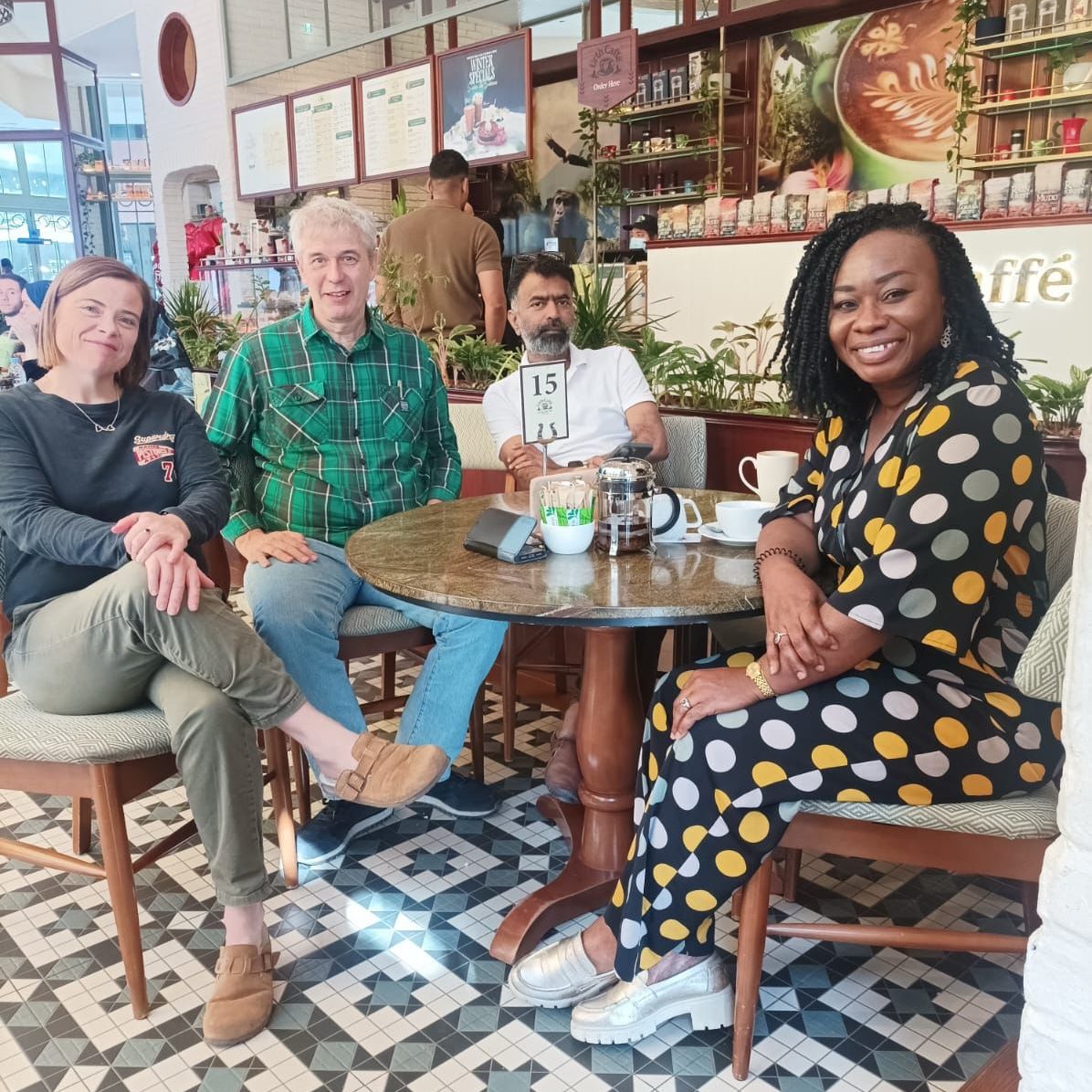
My international colleagues add depth to my perspective and transformation practice, adding a sense of community and purpose to what is a deeply human endeavour.
How I Can Help
Through The Leadership Alchemist, I work with organisations across the public, private and third sectors to build leadership capability for complex environments.
My services include:
- Strategic Consultancy – helping executive teams navigate complexity, organisational change and systems transformation.
- Executive Coaching – supporting senior leaders to develop clarity, confidence and reflective leadership practice.
- Leadership Development – designing and facilitating programmes that strengthen adaptive leadership, resilience and strategic capability.
- Action Learning Facilitation and Serious Gaming – enabling leaders and teams to address real organisational challenges through structured inquiry, collaborative learning and measurable outcomes.
Whether you are leading organisational transformation, developing future leaders or seeking to strengthen strategic capability, the objective remains the same:
Keeping people - not simply technology - at the heart of better leadership.
If these challenges resonate with your organisation, I'd welcome a conversation about how we can work together to develop leaders who are equipped not only for today's complexity, but for tomorrow's opportunities.
Stay safe, and add value. \
The Leadership Alchemist
References
Heifetz, R., Grashow, A. & Linsky, M. (2009). The Practice of Adaptive Leadership. Harvard Business Press.
Revans, R. W. (1982). The Origins and Growth of Action Learning. Chartwell-Bratt.
Schön, D. A. (1983). The Reflective Practitioner: How Professionals Think in Action. Basic Books.
Senge, P. M. (1990). The Fifth Discipline: The Art and Practice of the Learning Organization. Doubleday.
Southwick, S. M., Bonanno, G. A., Masten, A. S., Panter-Brick, C. & Yehuda, R. (2014). "Resilience definitions, theory, and challenges." European Journal of Psychotraumatology, 5.
World Economic Forum. (2025). The Future of Jobs Report. (Highlighting the growing importance of analytical thinking, resilience, leadership and lifelong learning alongside AI adoption.)