Thursday 27 August 26
Leading Across Borders: The Alchemy of Connection, Complexity and Collaboration
By The Leadership Alchemist, a performance optimisation expert who believes in ethical intelligence, practical productivity, and the responsible acceleration of human potential.
The world of work has become increasingly connected....and increasingly complex.
International teams can bring together extraordinary levels of expertise, creativity and perspective. They can challenge assumptions, open doors to new markets and create solutions that no single culture, function or geography could produce alone.
Yet cross-border collaboration is rarely as simple as putting talented people in the same virtual room.
Different cultures, languages, expectations, time zones, communication styles and approaches to authority all shape how people work together. Add organisational change, ambiguity and competing priorities, and leaders can find themselves navigating a system where the usual rules no longer seem to apply.
This is where leadership becomes less about having all the answers and more about creating the conditions for connection, trust and collective intelligence.
Connection Before Coordination
When teams span countries and cultures, it is tempting to focus immediately on processes: Who does what, when meetings happen, which technology everyone uses and how decisions are documented.
These things matter. But they are not the foundation of collaboration.
The foundation is connection. People collaborate more effectively when they feel seen, understood and valued. In international teams, this requires leaders to become curious about difference rather than treating it as an inconvenience to be managed.
A colleague who speaks less in meetings may not lack ideas. They may come from a culture where challenging senior colleagues publicly is discouraged. Someone who appears overly direct may not be insensitive; they may be communicating in a way that signals efficiency and respect in their cultural context.
The leadership opportunity is to move from judgement to curiosity:
“What might be true here that I cannot see yet?”
That question can transform relationships.
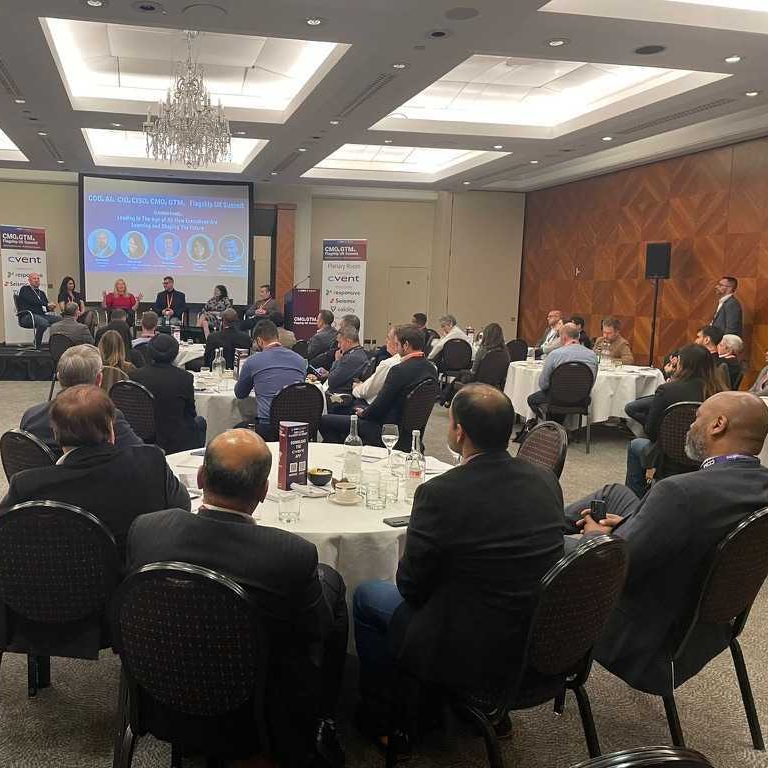
Cross cultural teams may be united thematically on a vertical or theme; such as the annual global Information security portfolio in conference in London.
The Productive Power of Difference
Cross-border teams can sometimes experience cultural difference as friction.
But friction is not necessarily a problem. It can be information.
Different perspectives reveal different assumptions. Different approaches to risk can expose blind spots. Different attitudes towards hierarchy, pace, conflict and decision-making can create tension, but they can also expand the collective capacity of the team.
The goal is not to eliminate difference. It is to create enough psychological safety for people to explore it.
Strong international teams do not require everyone to communicate, think or behave in the same way. They require shared principles that allow difference to coexist productively. That means creating clarity around questions such as:
- How do we make decisions?
- How do we disagree?
- What does accountability look like here?
- How do we raise concerns?
- Who needs to be involved?
- What does “urgent” actually mean?
- How do we make space for voices that may not naturally dominate?
Clarity creates a container within which diversity can become an asset rather than a source of confusion.
Leading in Complexity
International collaboration also asks leaders to become comfortable with complexity.
Complex environments rarely offer neat cause-and-effect relationships. A decision that works brilliantly in one market may create unintended consequences in another. A change that appears logical from headquarters may be experienced very differently by a local team.
In these environments, leadership cannot simply be about finding the “right answer.”
It becomes about asking better questions:
- What are we seeing?
- What are we missing?
- Who experiences this situation differently?
- What assumptions are influencing our decision?
- What needs to remain stable—and what needs to adapt?
This is a different kind of leadership. It is less about control and more about sense-making.
The leader becomes an alchemist: someone who can bring different elements together, hold tension without rushing to resolve it, and create the conditions for something new to emerge.
From Global Teams to One Human Team
Technology has made international collaboration easier, but connection still requires intention.
A video call can connect calendars without connecting people.
Leaders therefore need to create moments where teams can build relationships beyond immediate tasks. They need to understand the human context behind the work: the different realities people are experiencing, the pressures they are carrying and the perspectives they bring.
Small practices can have a significant impact.
Learn how people prefer to communicate. Make invisible cultural assumptions visible. Rotate meeting times so that inconvenience is shared rather than consistently carried by one geography. Create space for reflection, not just reporting. And, importantly, notice who is speaking—and who is not.
Inclusion is not simply inviting everyone into the conversation.
It is designing the conversation so that everyone has a meaningful opportunity to contribute.
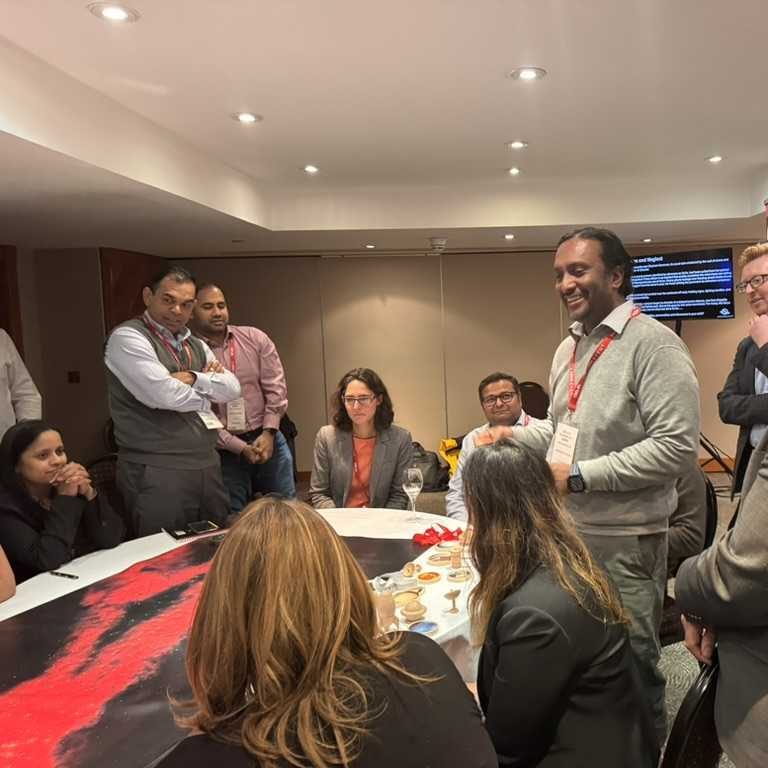
Cross-cultural C-Suite collaboration assisted by gamification on an international scale, using the Strategic Orbits Exercise®.
The Leadership Alchemy
The most effective cross-border leaders understand that collaboration is not created through proximity or process alone.
It is created through trust, curiosity, clarity and connection.
They recognise that complexity cannot always be simplified away. Sometimes it needs to be understood, held and navigated.
They know that cultural difference is not something to overcome, but something to work with.
And they recognise that the real competitive advantage of an international team is not that everyone brings the same perspective.
It is that everyone brings a different one - and the team has learned how to turn those differences into collective intelligence.
That is the alchemy of leadership across borders:
- Turning difference into dialogue.
- Turning complexity into possibility.
- Turning connection into collaboration.
In a world where organisations are increasingly global, distributed and interconnected, this may be one of the most important leadership capabilities of all.
The future belongs not simply to leaders who can work across borders, but to leaders who can build bridges between worlds.
Stay safe, and add value. \
The Leadership Alchemist