Saturday 10 January 26
Learning the Drums: Leadership, Resilience, and the Confidence to Be Bad at Something
By The Leadership Alchemist, a performance optimisation expert who believes in ethical intelligence, practical productivity, and the responsible acceleration of human potential.
This Christmas, I received a drum kit.
Not as a metaphor. Not as a carefully curated leadership development tool. An actual drum kit; sticks, skins, noise, and all.
Since then, I’ve been spending a little time most evenings learning to play. Badly. Off time. With stiff wrists and ankles, and a brain that keeps wanting to overthink what my hands and feet are supposed to be doing.
And that’s precisely the point.
As a leadership facilitator and creator of serious games, my professional world revolves around uncertainty, experimentation, and learning in complex environments. I help leaders and teams navigate ambiguity, make decisions without complete information, and adapt in real time. What I didn’t expect was how powerfully learning the drums at beginner level would reinforce those same capacities in me.
The Confidence to Suck (and Keep Going)
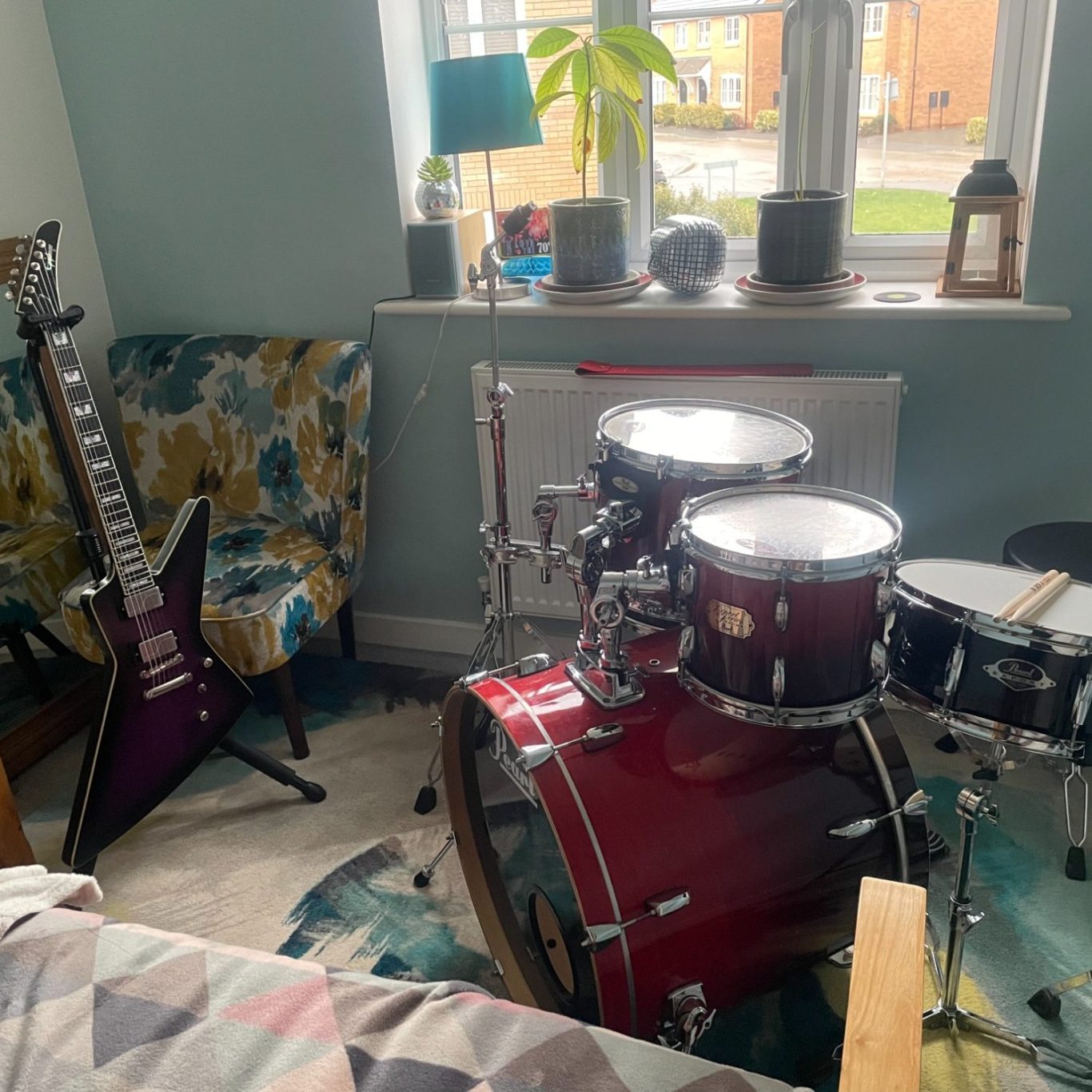
The Music Room at home, which doubles up as a laundry space.
Most leaders are highly competent people. That competence is hard-earned.....and it can become a trap.
When you’re good at what you do, there’s a subtle pressure to stay good. To avoid situations where you look clumsy, slow, or inexperienced. Over time, that pressure narrows learning.
Learning the drums has been a direct antidote to this.
I am unmistakably a beginner. There is no way to hide it. My timing slips. My co-ordination fails. Progress is non-linear. Some evenings I leave feeling accomplished; others, vaguely annoyed with my own limbs.
What I’m practicing, beyond rudiments and rhythms, is the confidence to be visibly bad at something while staying engaged. If you’re one of the people regularly receiving my videos, thanks for being my accountability and apologies for the sound quality!
The confidence to remain visible as you learn matters in leadership. It’s the difference between leaders who intellectually endorse experimentation and leaders who actually model it. Teams can sense when learning is performative versus embodied. Being willing to struggle in public without defensiveness or self-judgment creates psychological safety far more effectively than any slide deck ever could.
Drumming as a Lesson in Systems Thinking
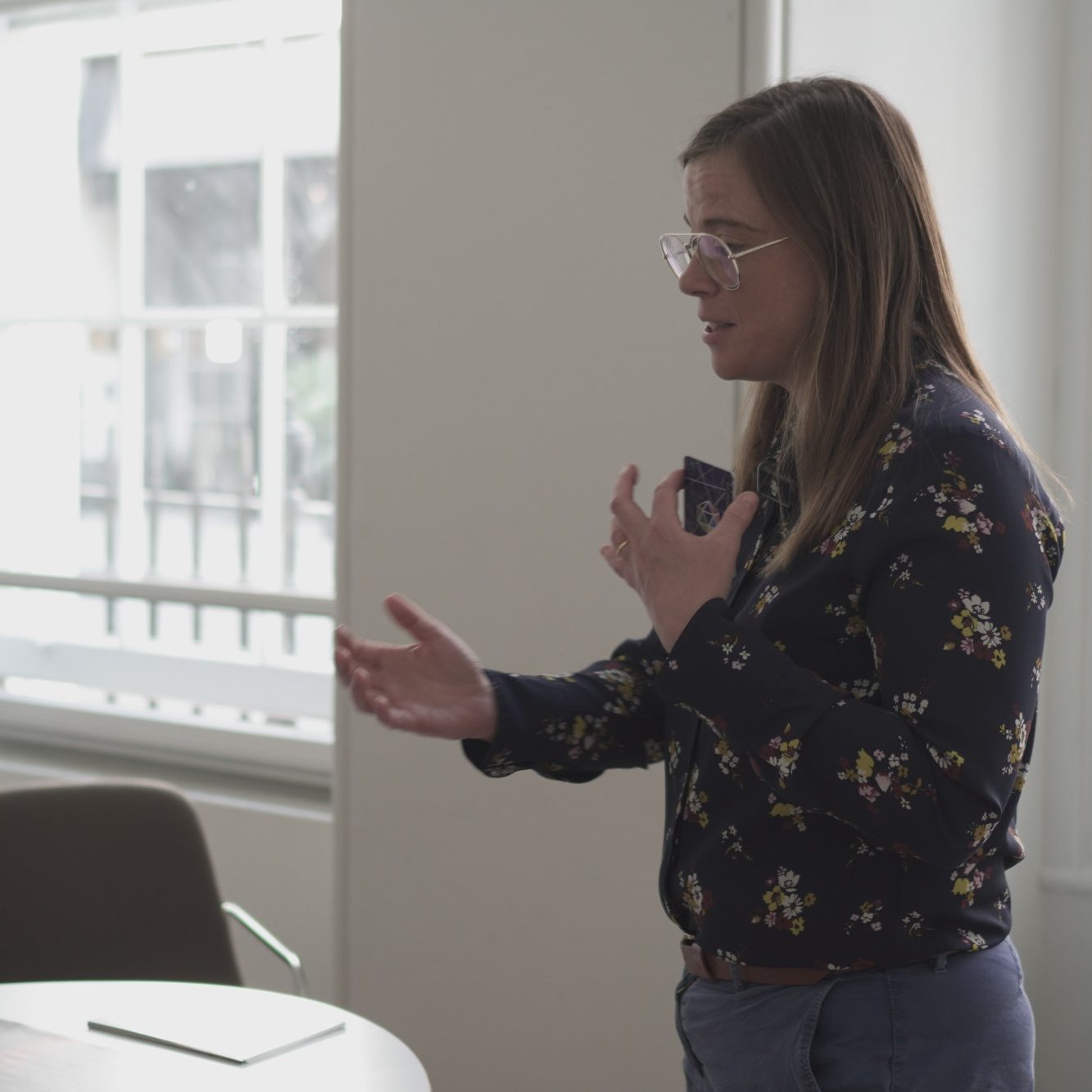
Facilitating a scale-up team through the Strategic Orbits Exercise at the RSA.
Drumming is a systems problem disguised as a musical one.
Each limb operates independently, yet nothing works unless they are integrated. Attention shifts constantly between micro-actions (stick height, grip, tempo) and macro-patterns (groove, structure, feel). When one part of the system tenses, the whole thing degrades.
This is leadership in miniature.
In complex organisations, leaders are rarely “playing one instrument.” They are co-ordinating multiple inputs; people, information, emotions, constraints, and often under time pressure. Over-control collapses performance. So does disengagement. This is more akin to conducting an orchestra, where the right balance of control and flow can so easily break down.
The drums are ruthless in their feedback. If I tighten up, the rhythm suffers. If I try to think my way through everything, I fall behind. When I relax just enough and trust the pattern, coherence emerges.
That lesson carries straight into my facilitation work. I’m noticing more comfort letting sessions breathe, responding to what’s emerging rather than forcing outcomes, and trusting the collective rhythm of the room.
Physical Regulation, Cognitive Capacity
Leadership conversations often focus on mindset. Less often do we talk about the body, despite the fact that leadership is an embodied activity.
Drumming is physical. It raises heart rate. It demands posture, balance, and bilateral coordination. It’s also deeply regulating. There’s a reason rhythm has been used across cultures for grounding and cohesion.
After drumming, I feel more centred. My nervous system is calmer, even though my body has been active. That combination; activation without agitation, is gold for leadership.
Cognitively, learning the drums stretches working memory, attention, and pattern recognition. It forces presence. You can’t drum effectively while mentally rehearsing tomorrow’s meeting or replaying yesterday’s conversation.
That presence is transferring. I’m showing up more available with clients and colleagues; less rushed, more responsive. Not because I’m trying harder, but because my baseline state is steadier.
Resilience Through Repetition
Progress on the drums doesn’t come from breakthroughs; it comes from consistency.
A few minutes each evening. Repeating the same pattern. Accepting incremental improvement. Letting frustration pass without turning it into a story about competence or identity.
This is resilience stripped of bravado.
In leadership development, we often frame resilience as toughness or endurance. In practice, it’s closer to willingness: Willingness to return, to try again, to stay curious when results aren’t immediate.
Learning the drums is quietly reinforcing that muscle. It’s reminding me that resilience isn’t about pushing through—it’s about staying in relationship with the work, even when it’s uncomfortable.
What This Means for My Work
As someone who designs and facilitates strategy events and serious games for C-Suites, Founders and leaders in career transitions, I’m deeply interested in how people learn under uncertainty. Games work because they create safe-to-fail environments where experimentation is not only allowed but required.
Learning the drums has become my own personal serious game.
It’s sharpening my empathy for learners. It’s grounding my facilitation in lived experience rather than theory. And it’s reminding me daily that mastery begins with awkwardness.
Most importantly, it’s helping me show up differently: More present, more resilient, and more open to what emerges.
I didn’t get my drums to become a drummer. I got them as a gift.
What I’m receiving in return is a renewed appreciation for learning itself, and a deeper trust in my ability to meet uncertainty with rhythm rather than resistance.
And that, it turns out, is a very good leadership practice. 🥁
Stay safe, and add value. \
The Leadership Alchemist