Thursday 09 July 26
The Human Side of Organisational Change: Why Operating Model Design Is Really About People
By The Leadership Alchemist, a performance optimisation expert who believes in ethical intelligence, practical productivity, and the responsible acceleration of human potential.
Across defence and security, technology and government practice, organisations are redesigning their operating models at an unprecedented pace. New technologies, evolving national priorities, fiscal constraints and increasing demands for agility are driving leaders to rethink how their organisations are structured and governed. Directorates are merging, functions are being redefined, decision-making is being redistributed, and accountability is shifting.
These are significant changes, and they are essential. Yet after working alongside defence and public sector organisations for decades, and navigating these transformations, I have come to believe that operating model design is rarely the hardest part. The real challenge begins once the organisation chart is signed off.
Transformation is often described in structural terms. We talk about governance, spans of control, reporting lines and target operating models. We invest months refining processes and clarifying responsibilities. We celebrate the launch of a new structure as though the work is complete.
For the people living through that change, however, the experience is entirely different.
While leaders ask whether the new model will improve organisational performance, individuals are quietly asking themselves a much more personal question:
"Where do I fit now?"
It is a deceptively simple question, but one that sits at the heart of every successful transformation.
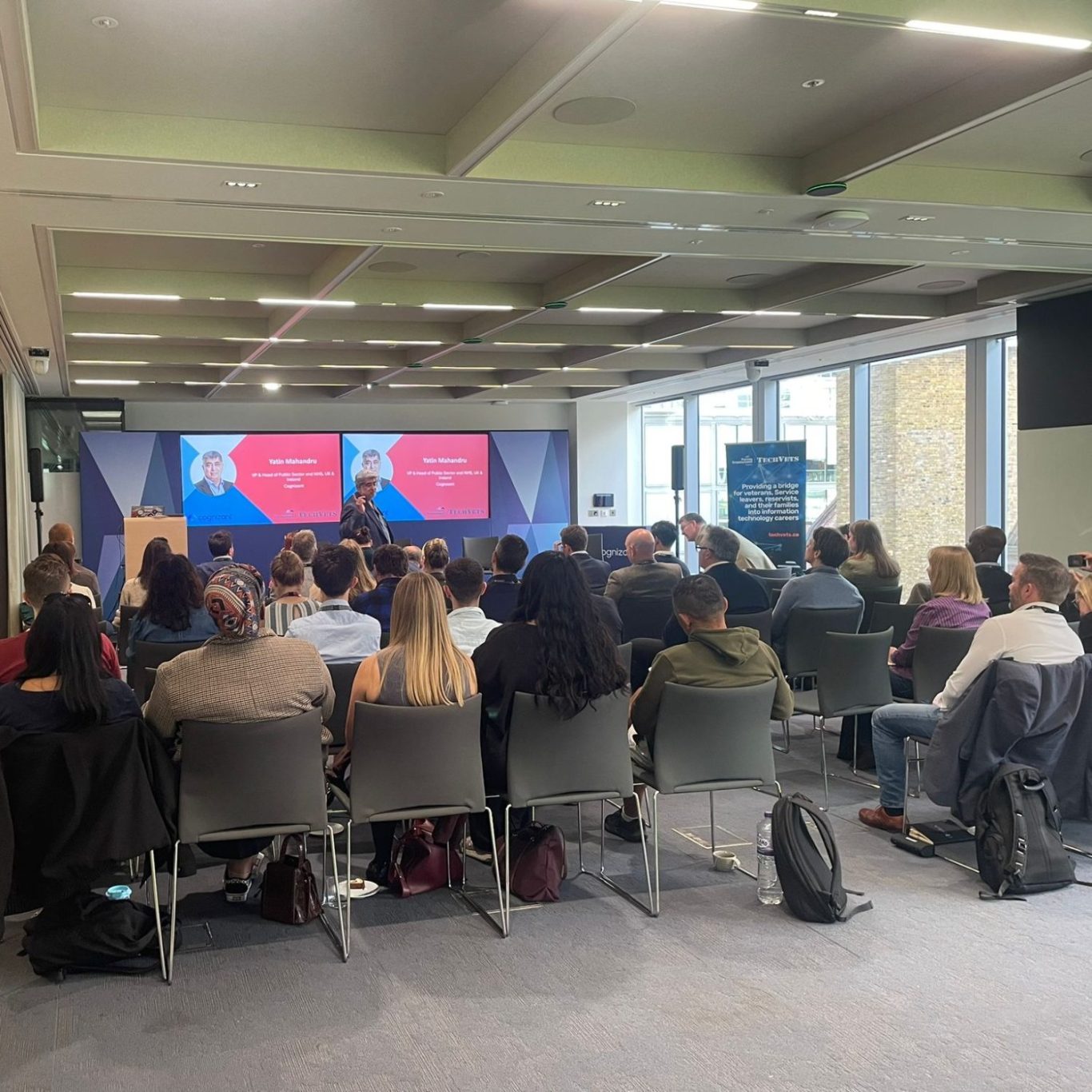
Fast moving government and technology companies are seeking new ways to resource their target operating models; such as TechVets, which matches companies directly with Service Leaver talent.
When organisations change, people are not simply adapting to new processes. They are redefining how they contribute, where they belong and, in many cases, how they see themselves as professionals. That transition is rarely captured on programme plans or transformation dashboards, yet it often determines whether change succeeds or quietly stalls.
This distinction between organisational change and human transition is one I see repeatedly across defence and government. Change is visible. It is announced, communicated and implemented. Transition is largely invisible. It unfolds over time as people let go of familiar ways of working while trying to establish confidence in an uncertain future.
In organisations where professional identity is deeply rooted in expertise, service and purpose, this process can be particularly profound. Someone who has spent twenty years becoming recognised as a subject matter expert may suddenly find themselves expected to lead strategically across functions. A trusted manager may discover that influence now matters more than authority. Teams that once worked independently are expected to collaborate in entirely new ways.
None of these expectations are unreasonable. But each requires people to become something different from who they were before.
This is why I believe organisational structure, transition and imposter experiences are not separate conversations. They are different expressions of the same human response to change.
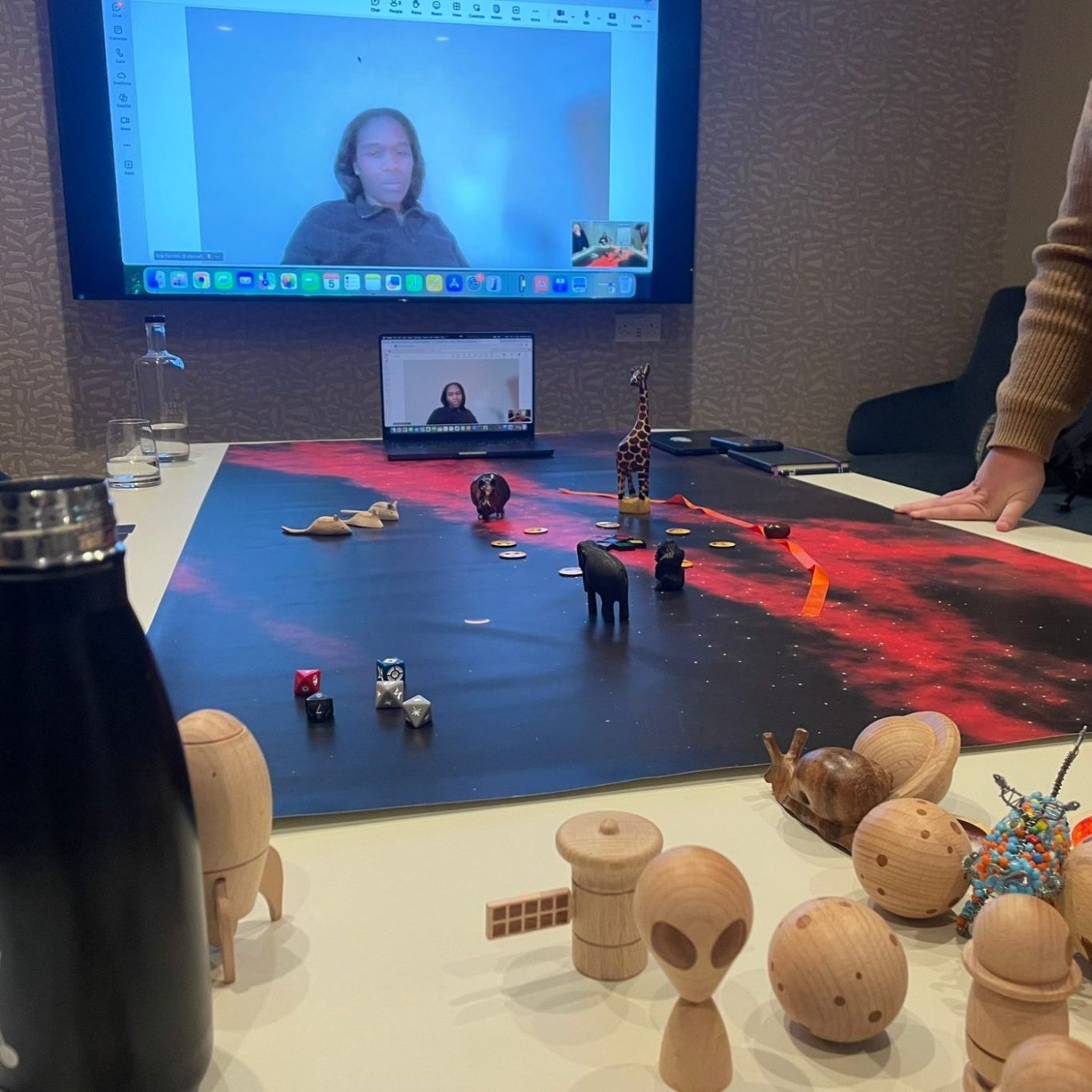
Our gamified and action-based services provide cognitive stretch, exercising leadership skills in action and through uncertainty. This includes strategic methods like our proprietary Strategic Orbits Exercise®.
When leaders move into unfamiliar roles or inherit broader responsibilities, they often experience a quiet loss of certainty. The expertise that previously gave them confidence no longer feels sufficient. Decisions become more ambiguous, expectations less defined, and success harder to measure. It is in these moments that even highly capable leaders begin questioning whether they are truly equipped for what lies ahead.
We often describe this as ‘imposter syndrome’, as though it exists solely within the individual. Increasingly, research suggests a more nuanced picture. Organisational culture, leadership behaviours and workplace environments all shape whether people experience confidence or self-doubt during periods of change. In other words, what appears to be a personal confidence issue is frequently an organisational transition issue.
This matters because organisations can unintentionally create the very conditions that undermine the leadership confidence they need most.
Operating model redesign does not simply redistribute work. It redistributes identity.
That is why culture deserves far greater attention during transformation than it often receives.
Operating models define how work is intended to flow. Culture determines how it actually does.
Every organisation has an official operating model, documented in frameworks, governance arrangements and organisation charts. It also has an unofficial operating model, built through relationships, trust, unwritten rules and years of shared experience.
In defence and government practice, these informal systems are remarkably resilient. They have often developed over decades, shaped by operational realities, institutional memory and a deep commitment to public service. They cannot be redesigned in a workshop.
This is where many transformation programmes encounter unexpected resistance. Not because people reject the vision, but because the culture continues to reinforce yesterday's behaviours inside tomorrow's structure.
I have seen thoughtfully designed operating models fail to deliver their intended outcomes, not because the design lacked rigour, but because leaders assumed culture would naturally follow structure.
It rarely does.
Culture changes through conversations, shared experiences and trusted relationships. It changes when leaders model different behaviours and when people feel safe enough to experiment, learn and occasionally fail. Above all, it changes through people whom others choose to follow.
Every organisation has these individuals.
They are rarely the most senior people in the room, yet their influence is unmistakable. Colleagues seek them out when uncertainty arises. They interpret strategy in ways that feel practical and meaningful. They connect teams, challenge constructively and help others make sense of complexity.
I think of them as organisational changemakers.
Their authority is seldom formal, but their impact is profound. Particularly within defence and government environments, where credibility is earned through relationships rather than hierarchy, these individuals often determine whether a new operating model becomes embedded or remains little more than an organisational chart.
The most successful transformations I have supported recognise this early. They understand that governance creates accountability, but culture creates commitment. Programme offices co-ordinate activity, while changemakers build belief.
That distinction is easy to overlook. Yet it explains why two organisations implementing almost identical operating models can achieve entirely different outcomes.
Organisational research from institutes like the Institute of Leadership (IoL) and the Learning Performance Institute (LPI) has consistently demonstrated the importance of management quality, employee voice and supportive workplace cultures in shaping engagement, wellbeing and organisational performance. These findings reinforce what many leaders instinctively know: People perform at their best when they understand not only what is changing, but why they matter within that change.
Perhaps this is the question executive teams should be asking more often.
Not simply, "Have we implemented the operating model?"
But rather, "Have we created the conditions in which people can thrive within it?"
Because operating models do not deliver outcomes. People do.
The organisations I have the privilege of supporting are responsible for some of the most complex and important work in the country. Their structures matter. Their governance matters. Their operating models matter enormously.
But sustainable transformation does not emerge from organisation charts alone.
It emerges when structure, culture and human transition are considered together. When leaders recognise that every restructure is also an identity transition. When they invest as much in confidence as they do in capability. And when they understand that the real architects of change are often the people quietly shaping culture every single day.
The organisations that will thrive in the years ahead will not necessarily be those with the most sophisticated operating models. They will be those whose leaders recognise that transformation is, first and foremost, a human endeavour.
Stay safe, and add value. \
The Leadership Alchemist