Friday 14 August 26
The Internal Consultant as Transformation Catalyst: Turning New Operating Models into New Ways of Working
By The Leadership Alchemist, a performance optimisation expert who believes in ethical intelligence, practical productivity, and the responsible acceleration of human potential.
A new operating model can look compelling on paper.
The organisation has redesigned its structures, clarified accountabilities, introduced new governance, mapped capabilities and perhaps invested heavily in technology. Yet months after launch, familiar behaviours often reappear. Decisions still escalate. Functions protect their boundaries. Meetings multiply. People continue to optimise yesterday’s organisation while being asked to deliver tomorrow’s.
Turning new operating models into new ways of working is where internal consultants can make a profound difference.
Internal consultants sit at a distinctive intersection: close enough to understand the organisation’s history, politics and unwritten rules, but sufficiently independent to challenge assumptions and help leaders see the system differently. At their best, they are not simply project managers, analysts or change communicators. They are transformation catalysts.
Their role is to help convert an operating model from a design into a lived organisational reality.
From Designing the Model to Making It Work
Operating-model transformation is often treated as a structural exercise.
Who reports to whom? Which activities sit where? What should be centralised or decentralised? Which capabilities need strengthening? What governance forums are required?
These questions matter, but they are only part of the transformation.
An operating model is ultimately expressed through thousands of everyday choices:
- How are decisions made?
- Who has the authority to act?
- How do teams resolve competing priorities?
- What happens when functions disagree?
- Which behaviours are rewarded?
- What information gets shared?
- How quickly does the organisation learn from experience?
This is why implementation cannot be separated from behaviour.
The internal consultant has an important role in connecting the formal architecture of the new model with the informal system in which people actually work.
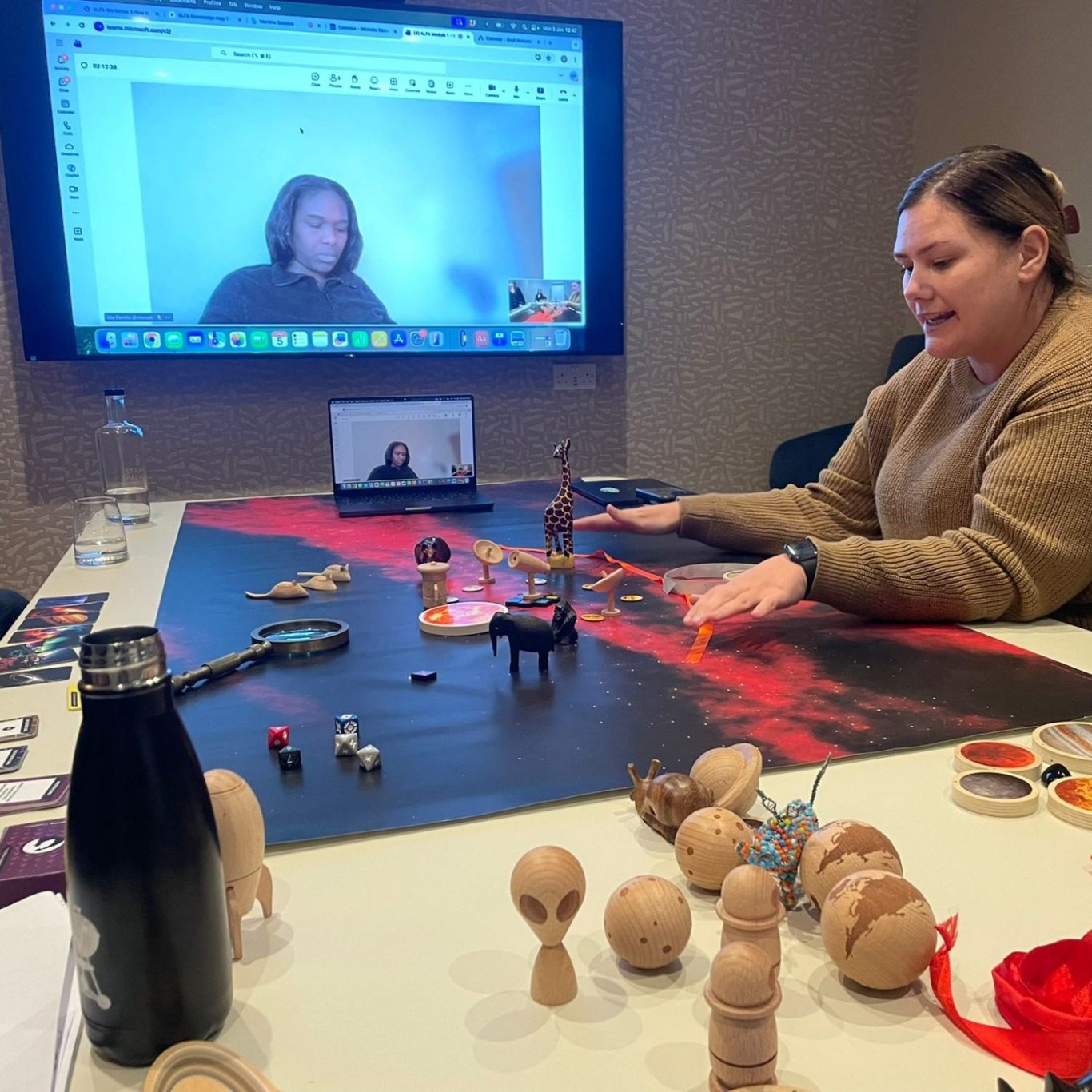
Our action-based programmes empower internal talent to facilitate organisational transformation and new target operating model implementation from within.
The Internal Consultant as System Translator
One of the most valuable contributions internal consultants make is translation.
Senior leaders may describe the transformation in terms of strategy, value creation and organisational design. Employees may experience exactly the same transformation as new processes, new meetings, new responsibilities and uncertainty about their future.
The internal consultant can connect these perspectives.
They can ask:
- What does the strategy require the operating model to enable?
- What does the operating model require people to do differently?
- What currently prevents those behaviours?
- What needs to be learned, tested or redesigned before the new model can become sustainable?
This moves the conversation away from simply communicating the new model towards creating the conditions in which it can work.
Serious Gaming: Rehearsing the Future
One particularly powerful approach is serious gaming.
Serious games are not games for entertainment. They are structured simulations designed to help people explore complex situations, test decisions and learn through experience. For operating-model implementation, this creates an opportunity that conventional workshops often miss: people can rehearse the future before they have to live it.
Imagine bringing leaders and teams together around a simulated business scenario; a major customer issue emerges, a strategic priority conflicts with a functional target, a critical decision crosses organisational boundaries, information is incomplete. The new governance model is put under pressure and participants have to make decisions using the proposed operating model. Very quickly, hidden assumptions surface. Perhaps decision rights are unclear. Perhaps two teams believe they own the same decision. Perhaps the governance process is too slow. Perhaps a supposedly collaborative model still encourages functional optimisation. The simulation becomes a safe environment for discovering these problems.
Instead of debating whether the operating model might work, people experience what happens when they try to use it.
That is powerful learning.
Action Learning: Turning Real Problems into Transformation Laboratories
A complementary approach is action learning.
Rather than asking people to learn about transformation through presentations and training, action learning brings groups together to work on genuine organisational challenges. A small, cross-functional group might take a live problem such as: “How do we reduce the time required to make critical customer decisions across three functions?”
The group does not simply analyse the issue and produce recommendations. It experiments, tests assumptions, engages stakeholders, tries something, observes what happens, reflects, and then it adapts.
This creates a powerful cycle:
Act → Observe → Reflect → Learn → Adapt → Act again.
For internal consultants, action learning can become a practical mechanism for embedding the new operating model while simultaneously building the organisation’s capability to improve it.
Combining Serious Gaming and Action Learning
Used together, these approaches can create a particularly effective transformation architecture.
Serious gaming allows people to rehearse the future, action learning allows them to experiment with the present.
The first can expose weaknesses in the proposed model before implementation and the second can help teams solve real problems while the model is being embedded.
For example:
1. Simulate - use a serious game to test how the new operating model behaves under pressure.
2. Diagnose - identify friction points, unclear accountabilities, behavioural barriers and unintended consequences.
3. Experiment - use action-learning teams to tackle the most important issues in real organisational settings.
4. Reflect - create structured opportunities for participants to examine what happened and what they learned.
5. Adapt - feed those insights back into processes, governance, capabilities and leadership practice.
6. Scale - capture what works and help other parts of the organisation adopt it.
The result is not a one-off implementation programme. It becomes a learning system for transformation.
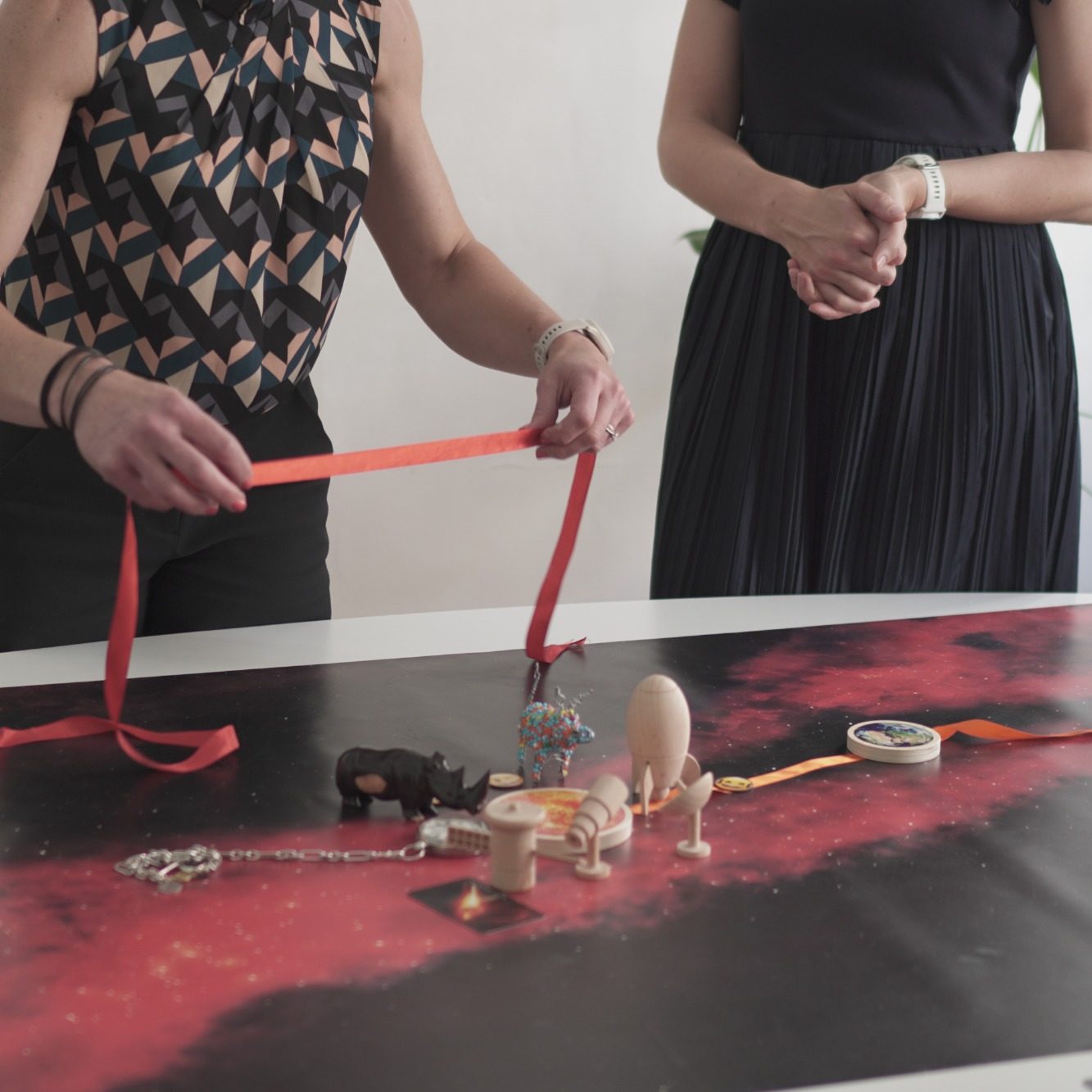
Clients dealing with their live supply chain growth through a simulated environment, helping them to see the unseen and make decisions faster.
The Internal Consultant's Changing Role
This requires internal consultants to move beyond traditional consulting behaviours.
They need to be comfortable being:
Architects - helping leaders make sense of the operating model.
Facilitators - creating conversations that cut across organisational boundaries.
Challengers - surfacing assumptions and asking difficult questions.
Experimenters - creating safe-to-fail environments in which new approaches can be tested.
Sense-makers - helping people interpret what they are experiencing.
Coaches - developing the leadership and problem-solving capability required for the new model.
Connectors - linking insights across functions, teams and levels of the organisation.
Perhaps most importantly, they need to resist becoming the people who own transformation. The ultimate measure of a successful internal consulting team is not how much transformation it delivers on behalf of the organisation. It is how much transformation capability it leaves behind.
From Change Management to Organisational Learning
This points towards a broader shift.
Transformation is often described as a journey from a current state to a future state, but complex organisations rarely move neatly from A to B.
The future keeps changing. Customer expectations change. Technology changes. Regulation changes. Competitors change. Strategies evolve. A successful operating model therefore needs more than implementation discipline. It needs the capacity to learn.
Internal consultants can help build that capacity.
Serious gaming develops the ability to anticipate and rehearse.
Action learning develops the ability to experiment and adapt.
Together, they help organisations move from asking:
“How do we implement the new operating model?”
to asking:
“How do we create an organisation capable of continually improving how it operates?”
That is a much more powerful question.
The Alchemy of Transformation
Transformation happens when formal design meets human behaviour, when strategy meets execution, and when organisational intent meets real-world experience. The internal consultant operates in that space.
They can help leaders turn abstract models into practical choices, turn uncertainty into experimentation and turn experience into organisational learning. That is why internal consulting should not be viewed simply as an efficient alternative to external consulting. Done well, it is a strategic capability.
The real alchemy is not creating the perfect operating model; it is helping people collectively discover how to make the model work - and giving them the confidence, skills and mechanisms to keep improving it.
The future operating model is not something an organisation simply implements, it is something an organisation learns how to live.
Stay safe, and add value. \
The Leadership Alchemist