Friday 8 May 26
The Leadership and Workforce Conversation Is Changing — And Organisations Need to Pay Attention
By The Leadership Alchemist, a performance optimisation expert who believes in ethical intelligence, practical productivity, and the responsible acceleration of human potential.
Over the last few months; and particularly this week, I’ve noticed a significant shift in the conversations taking place across leadership teams, people functions and operational environments.
Whether I’m speaking with public sector leaders, defence organisations, commercial partners or transformation teams, the themes are becoming increasingly consistent. Organisations are no longer simply focused on recruitment challenges or isolated skills shortages. The conversation is becoming broader, more strategic and far more connected to organisational resilience, workforce capability and long-term performance.
The real question many organisations are now wrestling with is this:
How do we build leadership capability, retain trust, sustain performance and navigate constant transformation at the same time?
Having worked across both government and commercial environments for many years, I’ve seen first-hand how quickly organisational pressure can expose weaknesses in leadership capability, culture and workforce resilience. In periods of stability, many organisations can operate effectively with traditional structures and leadership approaches. In periods of uncertainty and accelerated change, however, those same systems are often placed under enormous strain.
That pressure is now visible across almost every sector.
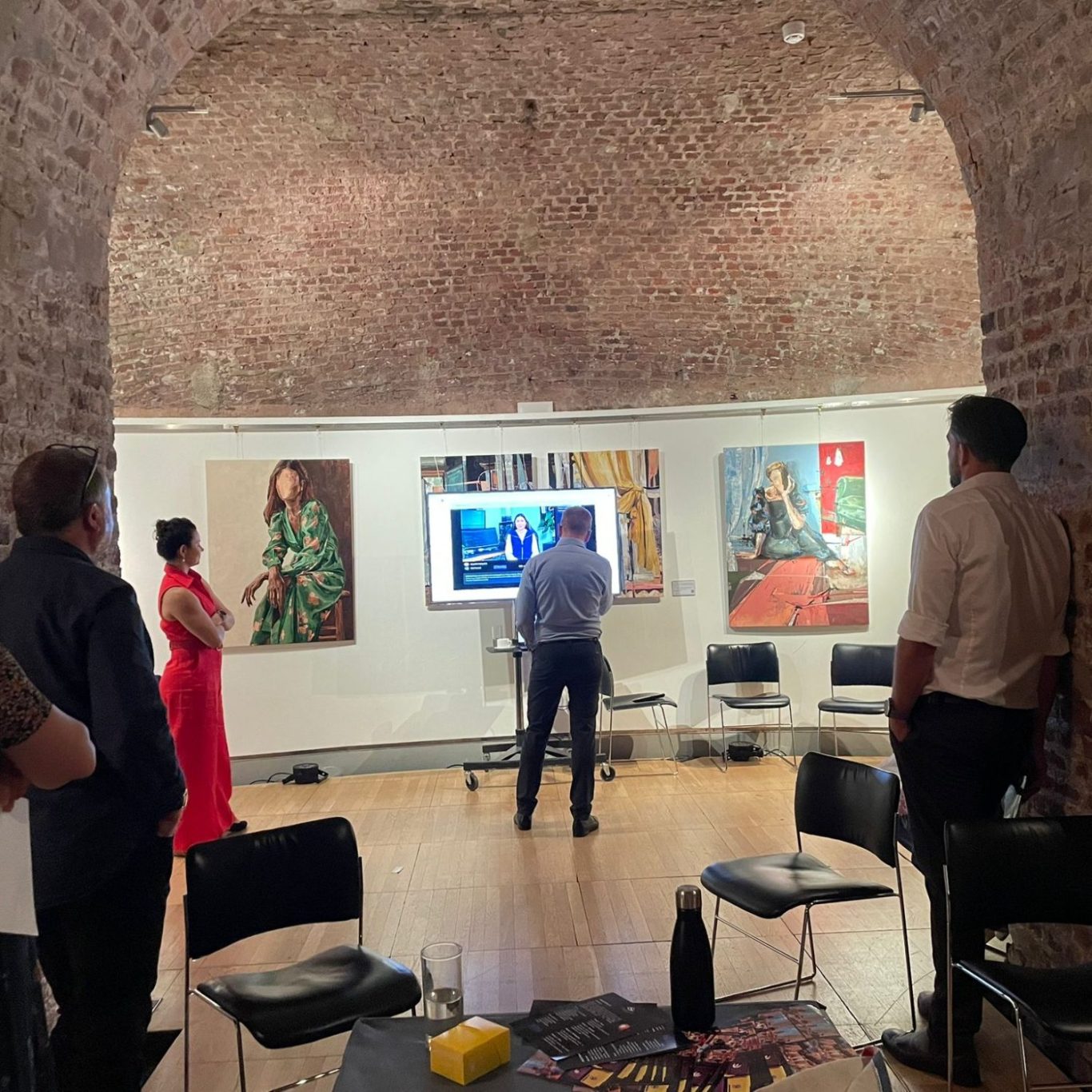
Our AI-enabled Strategic Orbits Exercise® conditions teams to work with and through complexity, extending reality and real-playing live business challenges in a controlled environment.
Workforce Pressures Are No Longer Just a Recruitment Problem
Many organisations are currently trying to deliver large-scale transformation whilst simultaneously managing workforce fatigue, retention concerns, competing operational priorities and rising expectations from employees and customers alike.
Technology and AI adoption are accelerating. Operating models are changing. Leadership teams are being asked to deliver more with less while maintaining engagement, productivity and wellbeing.
As a result, workforce capability is no longer sitting solely within HR conversations. It is becoming a strategic business issue.
Increasingly, organisations are recognising that hiring alone will not solve capability challenges. The real differentiator is the ability to develop, engage and retain people effectively while navigating continuous change.
Workforce strategy is rapidly becoming business strategy.
This is particularly visible in sectors facing sustained operational pressure or transformation complexity, including defence, infrastructure, technology, professional services and the public sector.
Leadership Capability Is Becoming a Critical Business Requirement
One of the clearest trends emerging right now is the growing demand for leaders who can operate effectively through ambiguity and change.
Technical expertise alone is no longer enough. Organisations need leaders who can build trust, influence across boundaries, navigate complexity, think systemically and create psychologically resilient teams.
Across both public and private sector environments, there is increasing recognition that leadership fatigue and disengagement are becoming significant organisational risks if left unaddressed.
Transformation programmes may look strong on paper, but without leadership capability and workforce engagement behind them, delivery quickly becomes fragile.
The challenge for executive teams is no longer simply delivering change — it is sustaining leadership effectiveness and workforce resilience whilst doing so.
What is also becoming increasingly apparent is that employees themselves are changing what they expect from organisations and leaders. Development, purpose, progression and authenticity matter more than ever. People want leadership they can trust. They want environments where they feel invested in, where learning is continuous and where leadership feels credible and grounded in reality rather than corporate rhetoric.
For People Directors and executive teams, this means the employee value proposition can no longer rely solely on salary, benefits or brand reputation.
Culture, leadership quality and development opportunity are becoming major differentiators.
People stay where they feel developed, trusted and valued.
Organisations Are Reassessing Leadership Development
One of the most interesting shifts I’m seeing is how organisations are beginning to rethink traditional approaches to leadership development.
Generic training programmes and theoretical leadership models are struggling to create lasting behavioural change in environments that are moving as quickly as they are today.
Increasingly, organisations are questioning whether leadership programmes are genuinely translating into capability, whether learning is embedded into operational delivery and whether development investments are producing measurable organisational impact.
This is driving renewed interest in:
- Action learning,
- Cohort-based development,
- Peer learning environments,
- Reflective leadership,
- Coaching-led approaches.
From my own experience leading across complex public sector and commercial environments, I’ve consistently found that the most effective leadership development happens when people are given the opportunity to solve real problems together, challenge thinking collaboratively and reflect on live organisational challenges rather than simply consuming theory in isolation.
Leadership capability is built through experience, reflection and application - particularly during periods of uncertainty and change.
The organisations responding most effectively are often those creating space for leaders and teams to think differently together, rather than simply pushing harder operationally.
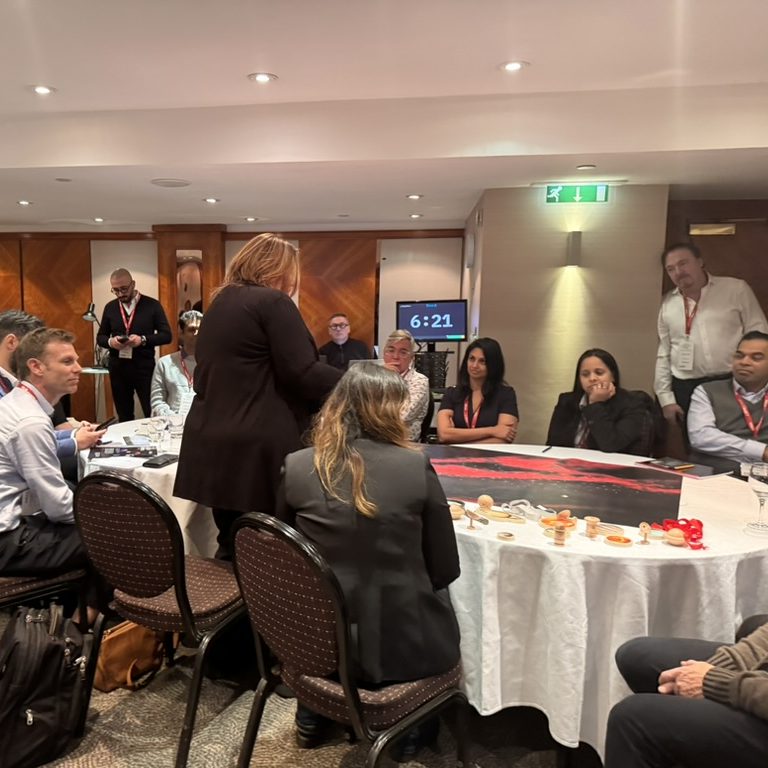
Action Learning methods create space for leaders to work together on live business challenges, framed as questions in a facilitated peer learning environment.
Transformation Fatigue Is Becoming a Real Organisational Risk
Across sectors, organisations are now operating in what feels like a near-constant state of transformation. While change remains necessary, there is increasing evidence that many organisations are underestimating the cumulative human impact of sustained transformation environments.
Leadership burnout, disengagement, siloed decision-making and declining organisational cohesion are becoming more common themes in executive conversations.
This is why many organisations are placing greater emphasis on leadership resilience, collaborative problem solving, workforce engagement and psychologically safe cultures.
In many cases, the issue is no longer a lack of strategy. It is a lack of organisational capacity to absorb and sustain change effectively over time.
That distinction matters. Because organisations can only move at the speed their people are capable of learning and adapting.
Authenticity and Operational Credibility Matter More Than Ever
Perhaps the most significant shift of all is the growing preference for authenticity.
Across both government and commercial sectors, senior leaders are becoming increasingly sceptical of heavily packaged consultancy language and leadership models that feel disconnected from operational reality.
There is far greater appetite for:
- Practical insight,
- Lived experience,
- Operational credibility,
- Leadership approaches grounded in real-world complexity.
This matters because trust has become one of the most valuable organisational currencies.
Employees and leaders alike can quickly recognise when development approaches lack authenticity or practical relevance.
In complex environments, credibility matters. Practical experience matters. Trust matters.
Having spent much of my career operating across government, operational delivery and commercial leadership environments, I’ve seen the difference that credible, reflective and adaptive leadership can make — particularly during periods of uncertainty and transformation.
The organisations that are thriving are rarely the ones relying solely on process or hierarchy. They are the organisations investing intentionally in leadership capability, workforce resilience and collaborative learning.
The Future of Leadership Development Will Look Different
As organisations continue to navigate complexity, transformation and accelerating change, one thing is becoming increasingly clear: Traditional approaches to leadership and workforce development are no longer moving quickly enough for the environments many organisations now operate within.
This is exactly why we are continuing to explore and experiment with new models of learning, leadership development and capability building; combining the power of action learning, peer collaboration and AI-enabled rapid learning approaches.
Our focus is on helping organisations create:
- Faster leadership development cycles,
- Stronger reflective capability,
- More adaptive decision-making,
- Practical learning environments directly connected to operational reality.
Rather than separating learning from delivery, we are increasingly interested in how leaders and teams can develop capability while actively solving live organisational challenges.
This includes:
- Action learning cohorts,
- Peer-led leadership development,
- AI-supported reflective learning,
- Accelerated capability building,
- Practical leadership interventions designed for complex operational environments.
The goal is simple:
To help organisations build leadership capability at the speed modern transformation now demands.
Because the future of leadership development is unlikely to be slower, more theoretical or more disconnected from reality.
It will need to be:
- Practical,
- Adaptive,
- Collaborative,
- Technology-enabled,
- Deeply human at the same time.
Looking Ahead
Looking forward, I believe the organisations that will perform strongest are not necessarily those with the largest budgets or the most aggressive recruitment strategies.
They will be the organisations that:
- Develop leaders at pace,
- Retain and engage talent effectively,
- Build resilient cultures,
- Strengthen collaboration,
- Create environments where people can continue to adapt and grow through complexity.
For People and Transformation Directors, executive teams and organisational leaders, this creates both challenge and opportunity. The conversation is no longer simply about attracting talent.
It is about creating the conditions in which people, leaders and organisations can thrive through uncertainty, complexity and continuous change.
If these themes resonate with the challenges your organisation is currently navigating — whether around leadership, transformation, workforce capability or organisational resilience — I’d welcome a conversation.
Stay safe, and add value. \
The Leadership Alchemist