Friday 30th September 26
The Leadership Test of a National Care Service
By The Leadership Alchemist, a performance optimisation expert who believes in ethical intelligence, practical productivity, and the responsible acceleration of human potential.
Keeping the human in the loop when systems, government and care are changing
There are moments in public policy when the question is no longer whether change is needed. The question becomes whether we are capable of leading the change well.
The announcement of plans for a National Care Service feels like one of those moments.
On 29 September 2026, Prime Minister Andy Burnham set out plans for a National Care Service, intended to be established in the next Parliament, with Baroness Louise Casey’s independent commission recommending how and when it should be built. The proposals include free personal care for older people based on need rather than ability to pay. (gov.uk)
At the same time, the Casey Commission is doing something equally important: listening. Its Big Conversation on Care is bringing citizens into the debate about what adult social care should deliver, who should receive it and how future needs should be met. (gov.uk)
Whatever the eventual shape of the system, one thing is already clear.
This isn't going to be solved by a policy document alone.
It will be lived by people receiving care, families, care workers, providers, commissioners, communities and NHS colleagues. It will be experienced in thousands of interactions where policy meets reality.
And that is where my interest begins.
Because through my work as The Leadership Alchemist, and through working with organisations facing complexity across care, health, government and other systems, I have become increasingly interested in what happens when the challenge is too complex for any one person, profession or organisation to solve alone.
This is not one problem
Social care is often discussed as though it were a problem waiting for the right answer, but I don't see it that way.
Rittel and Webber's concept of the wicked problem is useful here. These are problems that cannot be definitively formulated or solved in the way that a technical problem can. There is no single right answer, and every attempt to intervene changes the context in which the next decision has to be made.
Keith Grint later developed the distinction between tame, wicked and critical problems, linking different types of problem to different forms of leadership.
This distinction matters enormously in government.
Government is full of people who are exceptionally good at solving problems. But the hardest challenges don't stay neatly inside departmental boundaries. Social care reaches into health, local government, finance, workforce, housing, communities and the voluntary and independent sectors.
The problem doesn't recognise the organisational chart. So why should leadership?
The current terms of reference for the Casey Commission reflect precisely this complexity, requiring work across areas including health, Treasury, local government and work and pensions. (gov.uk)
That makes the National Care Service not simply a policy challenge: it is a leadership challenge across a system.
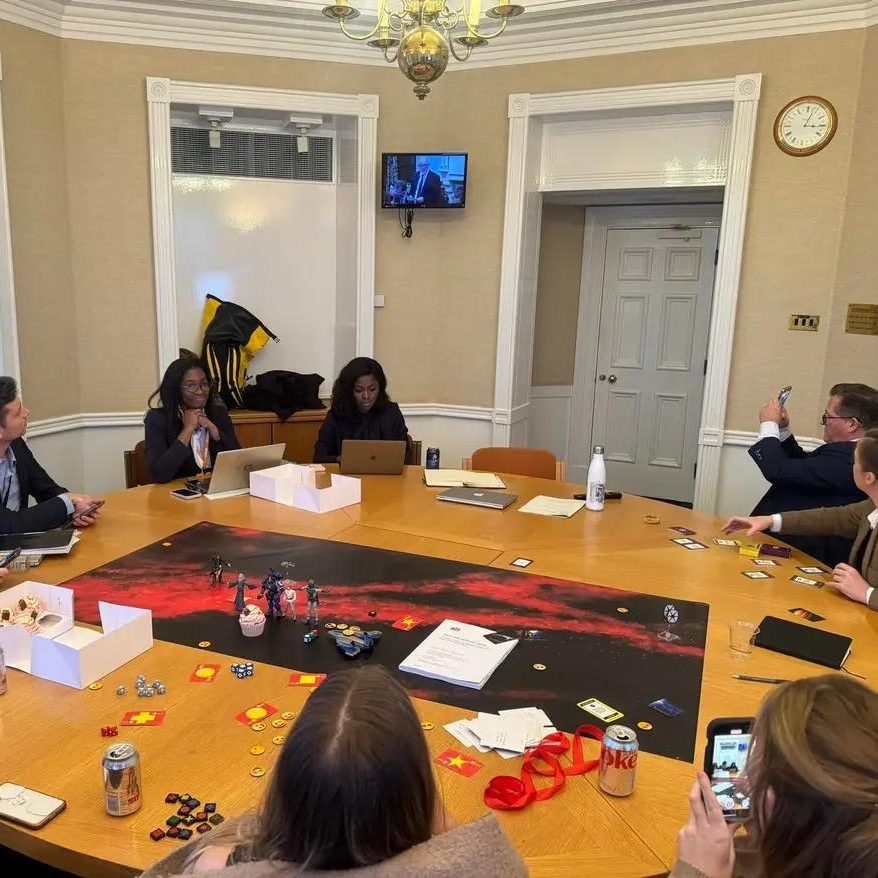
Working with a parliamentary team in Whitehall, where real life policy was playing out in the chamber as we ‘real-played’ the national and regional future through our tabletop Strategic Orbits Exercise®. Some of the events we modelled through this serious game happened for real in the next 6 months, enabling key desisions to be shaped through foresight.
The question I would put to government leaders
If I were bringing the leaders responsible for this transformation into a room, I would not start by asking: “What should the National Care Service look like?”. I would start with a more uncomfortable question: “What will each of us have to change about the way we lead for this to work?”, Because transformation always creates movement. Budgets move, accountabilities move, power moves, professional identities shift and organisational boundaries can become less certain.
The difficult leadership work begins when achieving the desired outcome requires us to change something about ourselves or our own organisation. This is where I think leadership needs to move beyond alignment.
Alignment sounds attractive, but complex systems are rarely aligned in the conventional sense. They contain different interests, different experiences and sometimes genuinely conflicting truths.
The leadership task is therefore not necessarily to make everyone agree, it is to create the conditions in which people can disagree productively, understand the system beyond their own perspective and still move forward together.
That requires curiosity, courage and the ability to stay open when certainty would be much more comfortable.
The department is not the system
One of the recurring traps in public-sector transformation is that we organise leadership around organisational boundaries while the problem itself ignores those boundaries.
The Treasury sees affordability, health sees pressure on the NHS, local government sees capacity and accountability, care providers see workforce, viability and commissioning. Whereras families experience something much simpler: “We need help.”
Every perspective is legitimate, none is sufficient on its own.
The government's own principles for the emerging National Care Service recognise this, emphasising integration between hospital, home care and community services, prevention, sustainable funding and putting citizens' needs at the centre. (gov.uk) But principles don't implement themselves. People do, and that is why leadership capability matters as much as policy design.
Keeping the human in the loop
We have become increasingly interested in what happens when leaders are taken out of the comfort of discussion and given the opportunity to experience the system they are trying to change. This is one of the reasons Strategic Orbits Exercise® has become such an important part of our wider work.
Through real-play, we can make the implicit explicit. We can surface assumptions, explore different perspectives, introduce uncertainty and rehearse conversations before they happen in the real world. It changes the nature of leadership learning. Instead of asking, “What would you do?”, we create circumstances in which people actually have to respond, and their response tells us something.
It tells us about their assumptions, their relationships, their confidence and the way they understand the wider system. Most importantly, it can reveal what needs to change before the consequences of not changing become real. That matters enormously in care because whenever we redesign a system, there is a danger that we become fascinated by its architecture: who commissions, who funds, who regulates, who employs and who holds accountability.
All of those questions matter, but somewhere underneath them is a person. Someone leaving hospital, someone receiving care at home, a family trying to cope, or care worker who knows something about the person they support that isn't captured in a database.
That is why one of our core leadership principles is: Keep the human in the loop.
Not as an argument against technology, systems or data. Rather, as a reminder that those things should strengthen human judgement and human experience - not replace them.
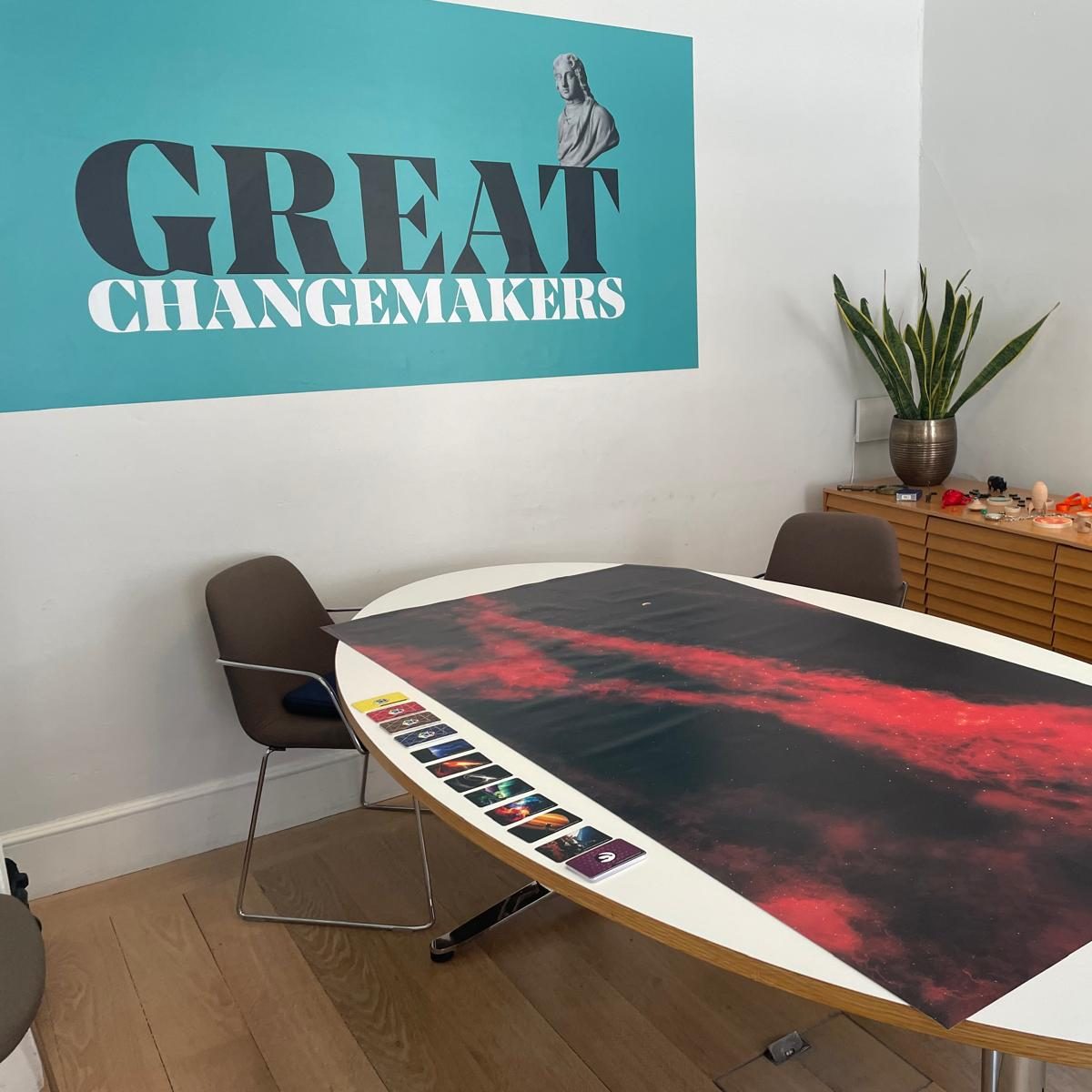
We invented the Strategic Orbits Exercise® to mobilise our foresight and action learning practice for the good of society and organisations; a mission that fits perfectly with our relationship with the Royal Society of Arts. As Fellows we are united by creativity for the common good.
The care sector cannot simply be the recipient of reform
There is another leadership opportunity here. Care providers are not simply organisations waiting for government to tell them what happens next, many are already innovating, developing services, managing workforce challenges and finding new ways to work with communities.
Through our work with organisations in the care sector, we have seen the leadership choices that emerge when an organisation grows and the environment around it changes. At some point, the question becomes whether the organisation will simply continue responding to what happens around it, or whether it will develop the confidence and capability to shape what comes next.
That might mean finding a distinctive role in the emerging care landscape. It might mean contributing to conversations beyond the organisation's immediate geography. It might mean having more challenging conversations with commissioners, government or other stakeholders.
These are not simply strategic questions. They are questions of leadership identity: Who do we want to be in the system we are helping to create?
Leadership needs somewhere to practise
This is why we believe experiential leadership development matters. We cannot learn everything we need to know about leading complexity from a presentation, a leadership model or a strategy document. At some point we have to practise. We need opportunities to encounter uncertainty, to hear perspectives that challenge us, to test our assumptions and to experience what happens when the plan meets reality.
For us, knowing is only the beginning. Knowledge needs to become capability. Capability needs to become confidence. Confidence needs to become action. And action needs to generate learning.That is the journey we are interested in helping leaders make.
The Leadership Alchemist perspective
Perhaps this is what we mean when we describe ourselves as The Leadership Alchemist. We are interested in transformation; but not transformation as a grand organisational slogan. We are interested in the moment when something shifts in a person; when a leader sees the system differently, when a difficult conversation becomes possible, when someone stops waiting for certainty and starts acting with thoughtful intent, when people who have been working around one another begin to work with one another. When knowledge becomes capability, and capability becomes action.
That is the kind of leadership development we want to create.
Not leadership as a collection of competencies to be ticked off. But leadership as a practice. A practice of noticing, questioning, connecting, experimenting, learning and acting.
So what happens next?
The National Care Service provides a fascinating case study in whether we can do this differently. The opportunity is significant, but so is the complexity.
The success of the reform will not ultimately be determined only by the structure that emerges. It will depend on the quality of leadership across the system - national and local, political and professional, organisational and community.
It will depend on whether people can work beyond departmental boundaries. Whether different perspectives can be held together. Whether frontline intelligence is genuinely heard. Whether citizens remain visible inside the system. And whether leaders have the capability to act when there is no perfect answer.
That is the leadership challenge we see. And it is the work we want to be part of.
If you are leading through complexity, let's talk
If you are leading an organisation, a team or a system through significant change, you may not need another leadership programme that tells you what good leadership looks like.
You may need somewhere to think differently, test assumptions, work with complexity and practise the conversations that matter.
That is where The Leadership Alchemist can help. We work with leaders and organisations facing complex change; helping them understand what is really happening in their system, develop the capability to lead through uncertainty and turn insight into action.
Sometimes that is through strategic coaching work.
Sometimes through action learning.
Sometimes through facilitated conversations.
Sometimes through Strategic Orbits Exercise® and real-play.
And sometimes the most valuable intervention is simply creating the space for leaders to stop, see the system differently and ask a better question.
If you are facing a leadership challenge where there is no simple answer, I'd like to hear about it.
Let's explore what might become possible when we move beyond knowing what needs to change - and start creating the conditions for people to work with the unknown.
The future doesn't need leaders with all the answers. It needs leaders capable of working with the questions.
Stay safe, and add value. \
The Leadership Alchemist
References
Rittel, H. W. J. & Webber, M. M. (1973), Dilemmas in a General Theory of Planning, Policy Sciences, 4, 155–169. DOI
Grint, K. (2005), Problems, Problems, Problems: The Social Construction of “Leadership”, Human Relations, 58(11), 1467–1494.
UK Government (2026), Prime Minister Andy Burnham sets out plans for a new National Care Service, 29 September 2026. GOV.UK announcement
UK Government (2026), Thousands invited to register for public panel for independent commission on adult social care, 21 September 2026. GOV.UK — Big Conversation on Care
UK Government (2026), Independent Commission into Adult Social Care: Terms of Reference. GOV.UK — Terms of Reference