Thursday 10th September 26
Your Best Looks Different Every Day
By The Leadership Alchemist, a performance optimisation expert who believes in ethical intelligence, practical productivity, and the responsible acceleration of human potential.
There is a phrase we hear constantly in leadership, business and personal development: “Do your best.” It sounds simple. Almost obvious. But perhaps we have misunderstood what it means.
We often imagine doing our best as performing at our highest level every day: Being focused, energetic, decisive, creative, productive and endlessly capable; but that isn't the reality of being human.
Some days, your best is extraordinary. You have energy, clarity and momentum. Ideas come easily, decisions feel straightforward and you seem to have more than enough to give. Other days, your best is simply getting through the door, staying present, listening carefully and doing one useful thing. Sometimes your best is having the humility to say: “Today I don't have my usual capacity, but I can still contribute.”
That is not weakness. That is leadership.
Showing Up Is a Leadership Act
We tend to celebrate the spectacular moments of leadership: The big decision, the breakthrough, the inspiring speech, the courageous intervention, but leadership is much more often expressed in the ordinary. It is answering the difficult question when you would rather avoid it. It is checking in with someone who is struggling. It is making the decision that needs to be made. It is admitting that you don't know. It is bringing your attention to the meeting when your mind is somewhere else. Sometimes, it is simply showing up.
Showing up does not mean pretending everything is fine. In fact, authentic leadership requires the opposite. It asks us to recognise what is true about the day we are having and then make a conscious choice about how we will meet it.
There is something profoundly powerful about a human being who can say: “This is difficult today, and I am still here.”
Not because they are unaffected by the difficulty, but because they have decided that difficulty does not get to make every decision for them.
Your Capacity Is Not Constant
One of the more damaging ideas in modern professional culture is that our output should remain consistent regardless of our circumstances, but humans are not machines, our capacity changes. Sleep, relationships, confidence changes and grief, uncertainty and life changes us.
There will be days when you walk into work with enormous energy and clarity. There will also be days when simply being there requires considerable effort. The important question is not: “Am I performing at my maximum today?” A more useful question is: “Given what I have today, how can I contribute meaningfully?”. That shift matters.
It moves us away from perfection and towards responsibility. It creates a more sustainable understanding of performance because it recognises something fundamental: Our capacity may change, but our ability to contribute does not disappear. Your best is not a fixed number. It is a relationship between who you are, what you have available and what the moment requires of you.
The Human Being Behind the Leader
Leadership development can sometimes become overly focused on competencies: communication, strategy, decision-making, emotional intelligence, resilience and influence. All of these matter, but underneath the competencies is a human being, and human beings have difficult days. The strongest leaders are not necessarily those who never struggle. They are often those who can remain connected to themselves and others while they are struggling.
Consider Abraham Lincoln, his presidency was defined by extraordinary pressure. He entered office as the United States moved towards civil war and spent his presidency navigating military failure, political opposition, immense loss of life and profound moral questions. Yet Lincoln continued to lead through uncertainty. In 1863, in the midst of the war, he issued the Emancipation Proclamation. Later that same year, he articulated a vision for what the country could become in the Gettysburg Address. He did not wait for circumstances to become easy before contributing, he contributed within the circumstances he had and that distinction is important.
Leadership is rarely exercised under perfect conditions.
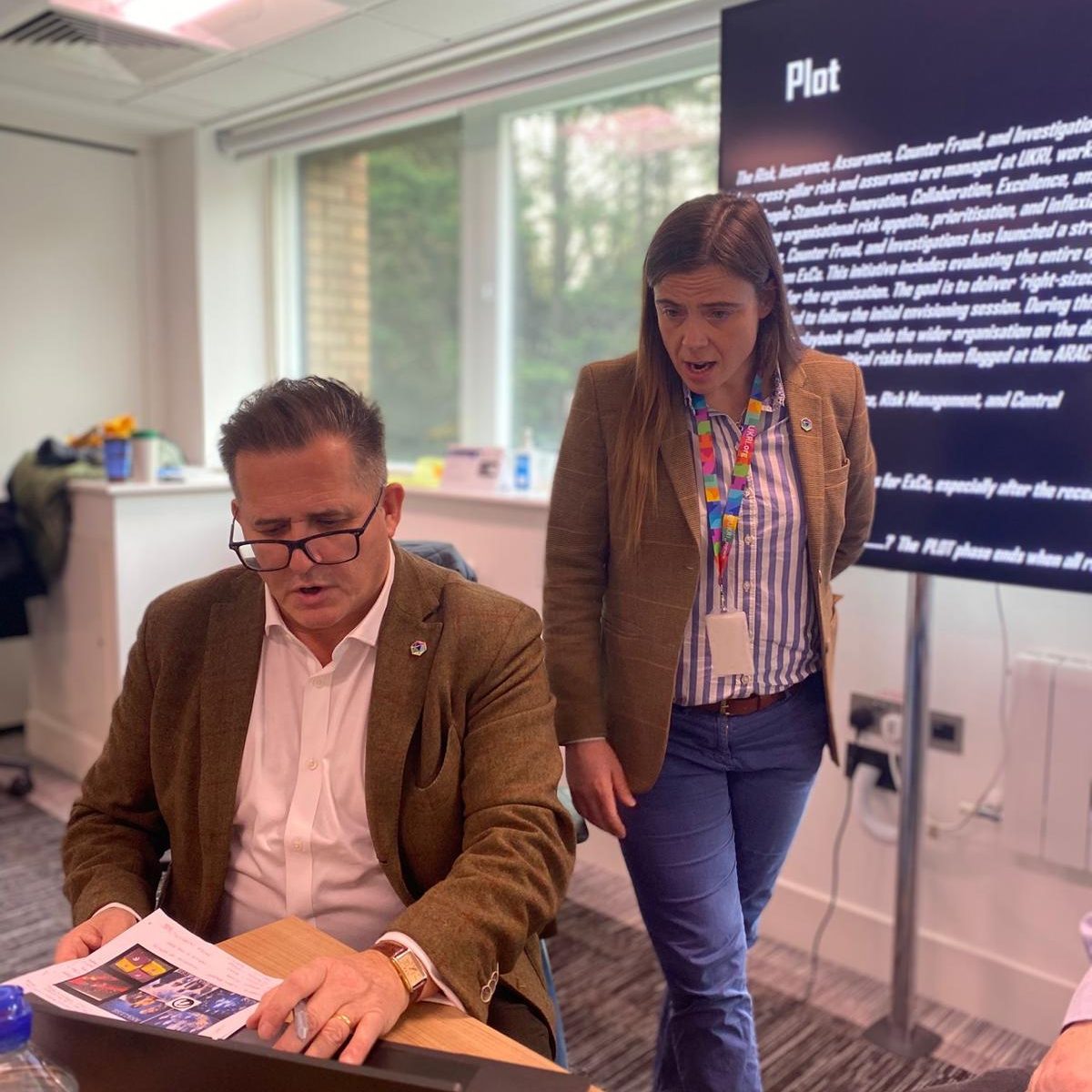
High pressure events and circumstances demand our presence more than they do our perfection. Often moments of stress lead to breakthoughs we don’t expect, when we show up authentically and use our presence as an instrument.
The Finest Hour Is Often the Difficult One
We can see something similar in Winston Churchill's leadership in 1940. Britain was facing an extraordinary crisis. Churchill became Prime Minister in May 1940 as the military situation in Europe deteriorated and the country confronted the possibility of defeat. His first speech as Prime Minister did not promise an easy road, it promised reality. He told Parliament that he had nothing to offer but “blood, toil, tears and sweat.”
A month later, following the fall of France and the evacuation from Dunkirk, Churchill spoke again about the challenge facing Britain and the possibility of invasion. The lesson is not that every leader needs Churchill's rhetoric, it is something much more human; you do not have to feel invincible to be useful, you do not need certainty to take the next responsible step, and you do not need to have your best day in order to make a meaningful contribution. Sometimes leadership is simply the decision to keep participating in the solution.
Contribution Over Performance
This is where I believe we need to rethink what we mean by “performance.” Performance asks: What did you achieve? Contribution asks: What did you bring? They are not the same thing.
You might have a day where you deliver an exceptional presentation, solve a complex problem and make a major commercial decision. That is a high-performance day. But another day, perhaps after a difficult night or during a period of uncertainty, your greatest contribution might be listening to a colleague who needs perspective. You may not have moved a project forward significantly but you helped a person move forward, that matters.
The evidence suggests that human connection and engagement are not soft extras in organisational life. They are connected to tangible outcomes. Gallup's large-scale meta-analysis of more than 180,000 work units and more than 3.3 million employees found meaningful relationships between employee engagement and outcomes including productivity, profitability, customer loyalty, retention and wellbeing. Teams in the top quartile for engagement showed median differences of 18% in sales productivity and 23% in profitability compared with teams in the bottom quartile.
The point isn't that everyone needs to be cheerful or “high performing” all the time, quite the opposite. It suggests that organisations benefit when people are genuinely connected to their work, their purpose and one another and connection requires authenticity.
Authenticity Does Not Mean Saying Everything
Authenticity is sometimes misunderstood as complete transparency: “This is how I feel, therefore everyone needs to know.” That isn't leadership, authenticity is not emotional dumping, it is congruence. It is knowing what is true for you and behaving in a way that is consistent with your values.
Sometimes authenticity looks like: "I'm having a difficult day, so I need to slow down and think this through." "I don't know the answer. Let's find someone who does.” or “I disagree, and I think we need to have the conversation.” Sometimes it looks like quietly getting on with the work when nobody is watching.
Authenticity gives people permission to be human without lowering the standard of responsibility. That is an important distinction. You can be human and accountable at the same time.
Florence Nightingale: Turning Difficult Circumstances Into Useful Action
Florence Nightingale offers another powerful example. During the Crimean War, she encountered appalling conditions in military hospitals. Rather than accepting those circumstances as inevitable, she gathered evidence, challenged assumptions and used data to make the case for systemic improvement. Her work documented the devastating mortality associated with poor sanitary conditions and the improvements that followed intervention.
What makes her example particularly relevant to leadership is that she did not simply feel that something was wrong; she paid attention, gathered evidence, contributed what she could and she turned observation into action.
That is what doing your best can look like: presence and progress, not heroic perfection.
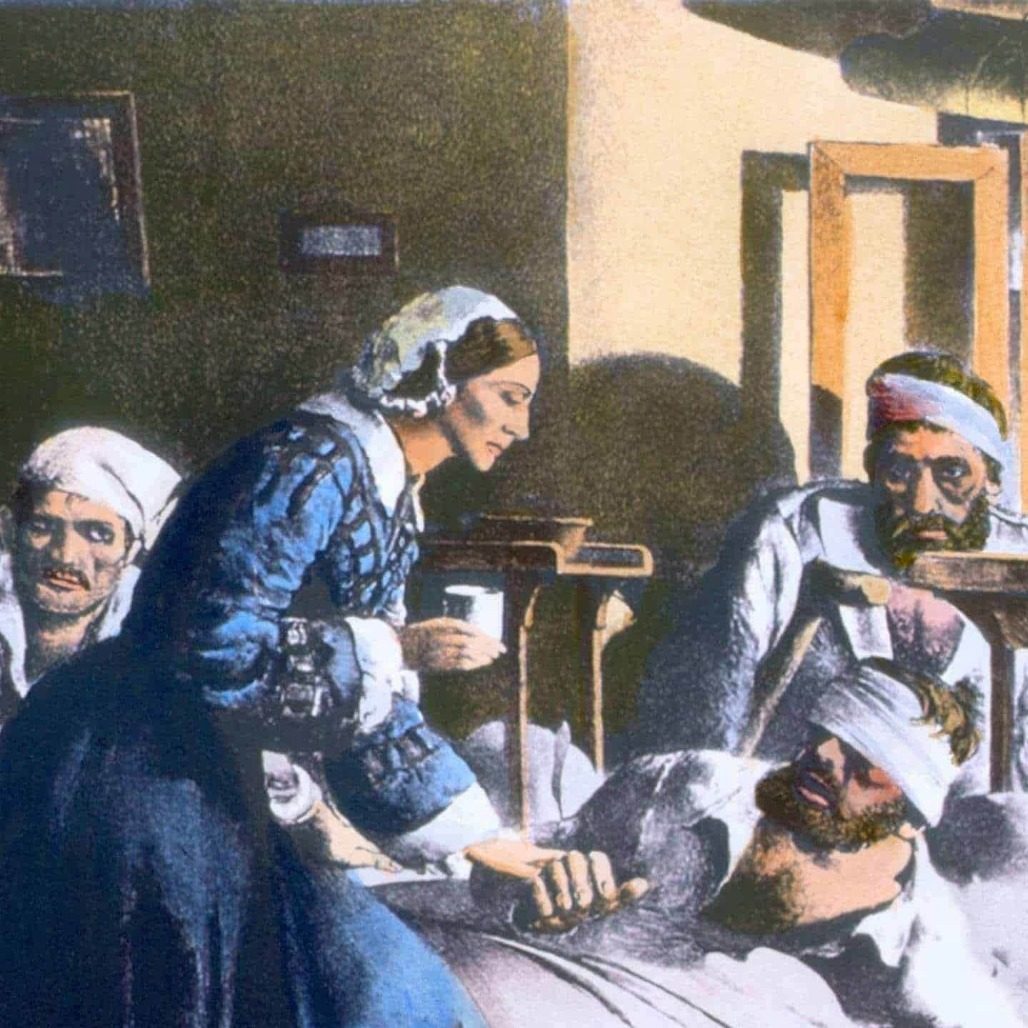
On 12th May 1820, Florence Nightingale was born. Famously nicknamed ‘The Lady with the Lamp’, she would go on to become a pioneer of modern medicine.
What Does “My Best” Look Like Today?
Perhaps the most powerful leadership question we can ask ourselves each morning is not: “How do I become exceptional today?” It is: “What does my best contribution look like today?” On a good day, the answer might be ambitious, on a difficult day, it might be modest; both can be valuable.
Your best might be making the difficult decision. It might be having the honest conversation you've been avoiding. It might be giving someone your full attention. It might be asking for help rather than pretending you have all the answers. It might be sharing an idea, holding a standard, admitting a mistake or creating clarity where there is confusion. Sometimes it might simply be choosing not to make a difficult day someone else's difficult day.
These things rarely appear on a performance dashboard but they shape culture, trust relationships and ultimately, they shape leadership.
We Don't Need More Perfect Leaders
We need more real leaders. Leaders who understand that resilience does not mean being unaffected. Leaders who can acknowledge difficulty without surrendering responsibility. Leaders who know that their value is not determined by how impressive they feel on any particular day. Leaders who can show up when they are energised, and leaders who can still contribute when they are tired, uncertain or stretched. Because leadership is not a performance we put on when conditions are favourable.
Leadership is a practice and like any practice, some days are graceful and some are messy. The invitation is not to be brilliant every day; it is to be present, authentic, to contribute, to do what you can with what you have and then, tomorrow, to show up again.
The Leadership Alchemist Perspective
At The Leadership Alchemist, we believe leadership is less about creating a polished version of yourself and more about becoming more fully yourself - with greater awareness, courage, choice and responsibility. Alchemy is transformation.
Perhaps one of the most important transformations a leader can make is moving from: “I have to be at my best every day.” to: “Every day, I can bring my best self to what is possible today.” Those are very different expectations. The first creates pressure but the second creates possibility.
Stay safe, and add value. \
The Leadership Alchemist